


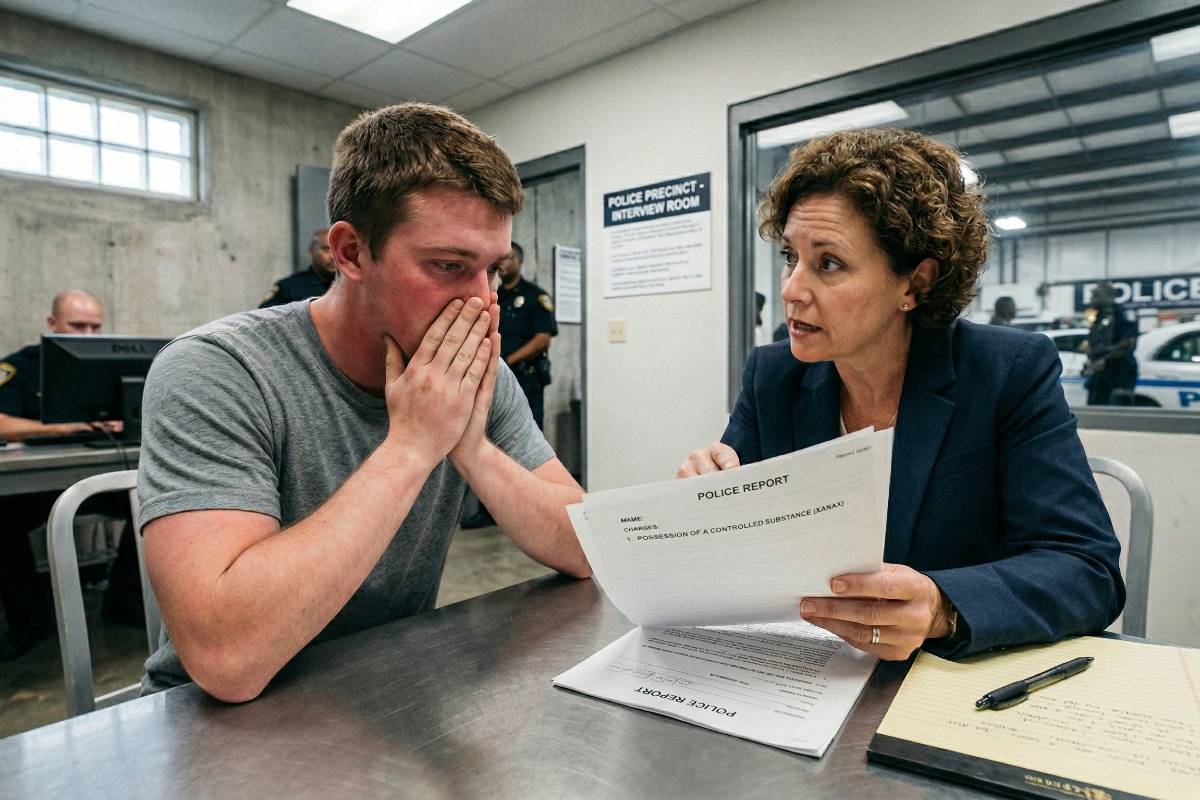
Facing a rape allegation in New York with no physical evidence? Learn how New York law defines consent, what the prosecution must prove, and the key defense strategies under NY Penal Law Article 130.
A rape allegation can emerge from a single encounter between two people who tell conflicting stories about the same event — with no witnesses, no surveillance footage, and little or no physical evidence. These are commonly called “he said, she said” cases: situations where the prosecution’s evidence rests primarily, or even entirely, on the complainant’s testimony against the defendant’s denial.
The stakes in these cases are enormous. A conviction for rape in the first degree in New York carries a mandatory minimum sentence of five years and a maximum of twenty-five years in state prison. Beyond incarceration, every rape conviction triggers mandatory registration under New York’s Sex Offender Registration Act (SORA) — which, at higher risk levels, means lifetime public listing on the sex offender registry. The reputational, professional, and personal consequences are irreversible.
This article provides a comprehensive overview of New York’s legal framework for sex offenses, what the prosecution must prove, the defense strategies available in consent-based cases, and why having an experienced New York sex crimes defense attorney is critical from the moment an investigation begins. The information here applies to cases prosecuted across New York City — Manhattan, Brooklyn, Queens, The Bronx, and Staten Island — as well as Long Island, including Nassau County and Suffolk County. For an overview of how New York law treats rape charges specifically, see our dedicated practice area page.
One foundational principle governs every case discussed here: under New York Penal Law Article 130, lack of consent is a required element of every sex offense. The prosecution always bears the burden of proving non-consent beyond a reasonable doubt. There are no exceptions to this requirement.
Understanding the Charges: New York’s Rape Statutes
If you are facing a rape allegation in New York, the first step is understanding exactly what charges may be brought and the penalties associated with each. New York’s Penal Law classifies rape into three degrees, each with distinct elements and sentencing ranges.
Rape in the First Degree — NY Penal Law § 130.35
Rape in the first degree is the most serious rape charge in New York. For a detailed overview, see our Rape in the First Degree defense page. It applies when sexual intercourse is accomplished by forcible compulsion, when the victim is physically helpless, when the victim is under eleven years old, or when the victim is under thirteen and the defendant is eighteen or older. It is classified as a Class B violent felony, carrying a mandatory minimum sentence of five years and a maximum of twenty-five years in state prison. Defendants convicted of this charge must serve at least six-sevenths of their sentence before becoming eligible for parole.
Rape in the Second Degree — NY Penal Law § 130.30
Rape in the second degree applies when the victim is under fifteen and the defendant is eighteen or older, or when the victim is mentally disabled or mentally incapacitated. See our Rape in the Second Degree defense page for additional information. It is a Class D felony punishable by two to seven years in prison, up to ten years of probation, and mandatory SORA registration. New York law does provide a narrow affirmative defense when the defendant is less than four years older.pdf) than the complainant in age-based cases.
Rape in the Third Degree — NY Penal Law § 130.25
Rape in the third degree covers non-consensual sexual intercourse, including situations where the victim clearly expressed non-consent and a reasonable person in the defendant’s position would have understood that refusal. See our Rape in the Third Degree defense page for more detail. It is a Class E felony, carrying a sentence of up to four years in prison, possible probation, and SORA registration.
Related Charges Often Filed in “He Said, She Said” Cases
Prosecutors frequently file additional charges alongside or in place of rape charges. These include Sexual Misconduct (§ 130.20), a Class A misdemeanor involving non-consensual intercourse or oral and anal sexual conduct (see our Sexual Misconduct defense page), and Forcible Touching (§ 130.52), a Class A misdemeanor involving intentional forcible touching of intimate parts (see our Forcible Touching defense page).
Important note: Effective September 1, 2024, New York restructured portions of Article 130. The former Criminal Sexual Act statutes (§§ 130.40 and 130.50), which previously covered oral and anal sexual conduct, were repealed and their provisions merged into the revised rape and sexual offense statutes. Anyone facing charges for conduct occurring before or after this date should consult with an attorney about which version of the law applies to their case.
| Charge | Statute | Classification | Sentence Range |
|---|---|---|---|
| Rape 1st Degree | PL § 130.35 | Class B Violent Felony | 5–25 years (mandatory minimum) |
| Rape 2nd Degree | PL § 130.30 | Class D Felony | 2–7 years |
| Rape 3rd Degree | PL § 130.25 | Class E Felony | Up to 4 years |
| Sexual Misconduct | PL § 130.20 | Class A Misdemeanor | Up to 1 year |
| Forcible Touching | PL § 130.52 | Class A Misdemeanor | Up to 1 year |
The Foundation of Every Case: New York’s Consent Law
A “he said, she said” rape case is, at its core, a dispute about consent. Understanding exactly how New York defines consent — and the specific ways the prosecution must prove its absence — is essential for anyone facing these charges.
Consent as a Universal Element
Under NY Penal Law § 130.05(1), lack of consent must be proven by the prosecution in every sex offense under Article 130, regardless of whether the specific charging statute mentions consent explicitly. This is a bedrock principle of New York sex crime law: the burden of proving that consent was absent never shifts to the defendant. The defendant is never required to prove that consent existed. For a deeper analysis of this provision, see Lebedin Kofman’s article on Consent in New York Law — A Deep Dive into Penal Law § 130.05.
Four Bases for Lack of Consent Under § 130.05(2)
New York law identifies four specific bases on which the prosecution can establish that consent was absent:
Forcible Compulsion — Under § 130.05(2)(a), consent is absent when the defendant used physical force or made a threat that placed the complainant in fear of immediate death, physical injury, or kidnapping. The term “forcible compulsion” is further defined in § 130.00(8).
Incapacity to Consent — Under § 130.05(2)(b), consent is legally impossible when the complainant is under seventeen, mentally disabled, mentally incapacitated, or physically helpless.
Lack of Acquiescence — Under § 130.05(2)(c), which applies only to sexual abuse and forcible touching charges, consent is absent when the complainant did not expressly or impliedly acquiesce to the contact.
Clear Expression of Non-Consent / Reasonable Person Standard — Under § 130.05(2)(d), applicable to certain Rape in the Third Degree charges, consent is absent when the complainant clearly expressed non-consent and a reasonable person in the defendant’s situation would have understood that expression.
Why This Matters for “He Said, She Said” Cases
In consent-based disputes, the prosecution cannot simply argue that the complainant said “no.” The prosecution must prove which specific category of non-consent applies — forcible compulsion, incapacity, lack of acquiescence, or clear expression under the reasonable person standard. The defense’s objective is to raise reasonable doubt about whether any of these elements existed during the encounter. Text messages, prior communications, and relationship history often become highly relevant evidence in this analysis.
A rape allegation built on conflicting accounts needs immediate defense work.
When a case turns on consent, credibility, communications, timing, intoxication, or prior relationship context, early defense work can change what evidence is preserved and how the allegation is framed. Waiting for the case to develop on its own can leave critical texts, location data, witness details, and impeachment issues harder to recover.
- Preserve communications, digital records, video, location data, and witness timelines.
- Review consent-law issues, forensic evidence, arrest exposure, and order-of-protection risks.
- Prepare for prosecutor contact, grand jury strategy, indictment risk, and sex-offender consequences.
Speak privately with a New York sex-crimes defense lawyer.
Call 646-663-4430 Request a free consultation Attorney Advertising. Prior results do not guarantee a similar outcome.The Prosecution’s Burden and the Reality of These Cases
The Burden of Proof: Beyond a Reasonable Doubt
The prosecution bears the burden of proving every element of a sex offense — including lack of consent — beyond a reasonable doubt. The defendant is never required to prove that consent occurred and is never required to prove innocence. However, there is an important reality that defense attorneys must account for: under New York law, corroboration is not legally required in sex crime prosecutions. A single witness’s testimony — the complainant’s alone — can legally support a conviction. The Court of Appeals affirmed this principle in People v. Jackson (2007) (citing People v. Schulz, 4 NY3d 521), making vigorous credibility challenges an essential defense tool.
NYC Sex Crime Statistics
The data illustrates just how frequently these cases arise and how contested they are. In 2024, the NYPD recorded 9,953 total rape and sex crime complaints, of which 1,341 were classified as rape and 8,612 as other sex crimes. Of all reported cases, 21.9% were classified as felonies and 78.1% as misdemeanors. In Manhattan, approximately 49% of sexual assault cases were declined by the District Attorney’s Office, and the conviction rate for prosecuted cases was roughly 44% — significantly lower than the conviction rate for first-degree murder cases in the same jurisdiction.
Nassau and Suffolk County Context
On Long Island, both counties maintain specialized prosecution units dedicated to sex crime cases. In Nassau County, the District Attorney operates a dedicated Special Victims Bureau that handles all cases involving sex crimes, domestic violence, and child and elder abuse. In Suffolk County, the Family Protection and Sexual Assault Bureau employs six assistant district attorneys alongside specialized investigators. Both counties participate in Sexual Assault Nurse Examiner (SANE) programs that collect forensic evidence and can significantly impact the defense.
National Context
Nationally, for every 1,000 sexual assaults reported, only approximately 50 result in arrest and just 28 lead to felony conviction. This data underscores a critical point: the prosecution fights aggressively in every case it decides to bring forward, and anyone facing charges should take the situation with the utmost seriousness.
The Role of Physical and Forensic Evidence
One of the most common misconceptions in “he said, she said” cases is that the absence of physical evidence means the case will simply disappear. In many consent-based disputes, both parties agree that sexual contact occurred — the dispute centers entirely on whether that contact was consensual.
DNA Evidence: Often Not the Central Issue
In consent-based cases, the defendant rarely denies that sexual contact took place. DNA and forensic evidence collected through a SANE examination may confirm that intercourse occurred, but this evidence does not and cannot address the question of consent. The presence of the defendant’s DNA proves contact — it does not prove a crime.
Notably, in People v. Regan (2023), the New York Court of Appeals dismissed an indictment where prosecutors waited more than four years to indict after DNA confirmed sexual contact, establishing that excessive pre-indictment delay can itself constitute a violation of the defendant’s constitutional right to due process.
Forensic Evidence That Can Help the Defense
Several categories of forensic evidence can support the defense in a consent-based case. The absence of injury documentation in a SANE examination can support a consent defense and undercut claims of forcible compulsion. If the complainant alleges incapacitation due to alcohol or drugs, toxicology results can be challenged to test whether true incapacity was actually present. The presence of DNA from third parties may also undermine the prosecution’s narrative or suggest alternative explanations for any documented injuries.
Challenging Forensic Evidence
Defense attorneys can challenge SANE exam methodology, chain of custody for collected samples, and the interpretation of forensic results. Defense counsel also has the right to retain independent forensic experts to review and contest the prosecution’s evidence. This is particularly important given that forensic testing procedures have faced credibility challenges in past New York cases.
Key Defense Strategies in “He Said, She Said” Cases
This section addresses the core defense strategies available under New York law — the tools an experienced defense attorney uses to raise reasonable doubt and protect the accused.
Challenging Credibility Through Inconsistencies
In cases where the outcome hinges on one person’s word against another’s, credibility is everything. Defense counsel will meticulously review every statement the complainant has given — to police, SANE nurses, prosecutors, and friends — identifying inconsistencies in timelines, changing details about the encounter, and prior contradictory statements. Even small discrepancies can become powerful instruments for establishing reasonable doubt.
Importantly, under New York evidence rules, the defense can cross-examine the complainant on prior false allegations of sexual assault made against other individuals. This line of questioning is not barred by the Rape Shield Law, and courts have held that evidence of fabricated prior accusations may be introduced if the defense can demonstrate that the earlier allegation was false.
Digital Evidence: The Modern Game-Changer
Text messages, emails, social media direct messages, and dating app communications from before, during, and after the alleged encounter can be dispositive in a consent-based case. Evidence of post-incident friendly communication between the parties — requests to meet again, affectionate messages, or casual conversation sent after the alleged event — can create powerful reasonable doubt about whether the encounter was non-consensual.
Defense attorneys should move quickly to preserve all digital evidence before it is deleted. Social media platforms and messaging services typically retain data for limited periods, and evidence that disappears cannot be recovered.
Evidence of Consent — Navigating the Rape Shield Law
New York courts recognize that evidence of a prior sexual relationship between the parties, ongoing communications, and the defendant’s reasonable belief that consent was given are all relevant to the defense. Under CPL § 60.42(1), a defendant may introduce evidence of prior sexual conduct between the accused and the complainant — an explicit exception to the Rape Shield Law — which can support a consent defense. This is distinct from attacking the complainant’s general sexual history with other individuals, which remains prohibited.
New York’s Rape Shield Law, codified at Criminal Procedure Law § 60.42, generally prohibits evidence of the complainant’s sexual history with other persons, but it contains five specific exceptions. Evidence of the complainant’s sexual history may be introduced if it involves prior conduct with the accused; shows a prostitution conviction within three years; rebuts prosecution evidence of the complainant’s lack of sexual activity during a given period; refutes prosecution evidence that the defendant caused pregnancy or disease; or is found relevant and admissible in the interests of justice by the court after a hearing outside the jury’s presence.
The Affirmative Defense Under NY Penal Law § 130.10
For charges where lack of consent is based solely on incapacity — mental disability, mental incapacitation, or physical helplessness — NY Penal Law § 130.10 provides a statutory affirmative defense. The defendant may argue that he or she did not know of the facts or conditions responsible for the complainant’s incapacity at the time of the act. This affirmative defense places the burden on the defendant to prove the defense by a preponderance of the evidence, but it represents a meaningful statutory protection in cases involving alleged incapacitation.
Challenging Prior Bad Acts Evidence — The Molineux Rule
Under New York’s historic Molineux rule, the prosecution is strictly limited in its ability to introduce evidence of a defendant’s prior uncharged sexual misconduct. This principle was at the center of the People v. Weinstein (2024) reversal, where the Court of Appeals overturned the conviction in part because of the improper admission of prior bad acts testimony. Under Molineux, evidence of prior uncharged conduct may not be used to show propensity — that the defendant is “the type of person” who commits sex crimes. It can only be admitted for specific, limited purposes such as proving motive, intent, or a unique pattern. Defense attorneys should be prepared to vigorously challenge Molineux applications in “he said, she said” cases, where the prosecution frequently seeks to introduce prior allegations to bolster an otherwise weak case.
Rape Trauma Syndrome Evidence — Limiting Prosecution Expert Testimony
Prosecutors may call expert witnesses to explain why the complainant delayed reporting, returned to the defendant, or behaved in ways that might seem inconsistent with having been assaulted — testimony commonly framed around Rape Trauma Syndrome (RTS). Under New York law, RTS expert testimony is admissible only to dispel juror misconceptions about how sexual assault victims may behave. It cannot be used to prove that a sexual assault occurred or to directly bolster the complainant’s credibility. Defense counsel should request limiting jury instructions on the use of RTS evidence and consider retaining independent experts to contextualize or rebut the prosecution’s RTS testimony.
The Investigation and Arrest: What To Do Immediately
If you are under investigation for or have been arrested on a rape allegation in New York, the decisions you make in the first hours and days can shape the outcome of the entire case.
Do Not Speak to the Police Without an Attorney
This point cannot be overstated: statements made to police before an attorney is present are almost always used against the defendant at trial. Understanding your rights during police encounters is essential. Under New York law, the right to counsel formally attaches at arraignment, but anything said to police before that point is fully admissible. New York’s right to counsel is broader than the federal standard — courts have expanded protections at earlier stages of investigation — but those protections only help if you invoke them. If you have retained an attorney, communicate that fact to police immediately. At that point, interrogation must cease.
The Arrest and Arraignment Process
In New York City, arraignment typically occurs within 24 hours of arrest. At arraignment, formal charges are read, a plea is entered — almost always “not guilty” at this stage — and bail or conditions of pretrial release are determined. For felony charges, the case then proceeds to a grand jury, which determines whether to issue a formal indictment. Sex offense defendants may be subject to electronic monitoring as a condition of pretrial release under New York’s bail reform framework.
Under Investigation But Not Yet Charged?
If police are asking questions or a detective has reached out, treat this as a critical warning sign — whether you have been detained or formally arrested, you should contact a defense attorney immediately. A skilled attorney can intervene before charges are filed, potentially preventing an arrest entirely.
Preserve Your Own Evidence
Immediately preserve all text messages, social media communications, emails, photos, and any other evidence that may be relevant to a consent defense. Screenshot and back up everything. Do not delete anything — destruction of evidence can itself create additional legal problems.
The Criminal Process: From Indictment to Trial
Understanding the procedural roadmap can help reduce anxiety and set realistic expectations about the timeline and stages of a rape prosecution in New York.
For felony rape charges, the prosecution presents evidence to a grand jury in a proceeding that is held in secret. The defense attorney is generally not permitted to be present. If the grand jury finds probable cause, a formal indictment is issued — though it is important to understand that an indictment does not automatically mean jail time. Under New York’s discovery reform — CPL Article 245 — prosecutors are now required to disclose virtually all evidence in their possession, including twenty-one specific categories of material, early in the case. The 2025 amendments to CPL Article 245 adjusted certain aspects of this framework, but defendants retain robust discovery rights.
Before trial, defense attorneys will typically file pre-trial motions to suppress improperly obtained evidence, challenge which Rape Shield Law exceptions the prosecution seeks to invoke, address Molineux issues regarding prior bad acts, and secure limiting instructions on expert testimony. At trial, the prosecution presents its case first. In consent-based “he said, she said” cases, the complainant’s testimony is central. The defense cross-examines, presents evidence of consent and credibility challenges, and contests every element the prosecution must prove beyond a reasonable doubt. Because New York law allows a conviction to rest on the testimony of a single witness, rigorous cross-examination and comprehensive credibility challenges are the defense’s primary tools.
Defense pages connected to consent, rape charges, and Article 130 exposure
The right next page depends on the allegation, charge level, evidence, and stage of the case. These resources connect this guide to the firm's sex-crimes defense architecture.
Consequences of a Conviction and Sex Offender Registration
Anyone facing rape charges in New York should fully understand what is at stake if the case results in a conviction.
Prison Sentences
The prison exposure for rape convictions in New York is severe: Rape in the First Degree carries 5 to 25 years with a mandatory minimum as a Class B violent felony; Rape in the Second Degree carries 2 to 7 years as a Class D felony; and Rape in the Third Degree carries up to 4 years as a Class E felony. In cases involving multiple victims or aggravating factors, prosecutors may also pursue predatory sexual assault charges, which carry even more severe penalties. For more on sentencing exposure, see our article on understanding the consequences of predatory sexual assault.
Sex Offender Registration (SORA)
Virtually all rape convictions trigger mandatory registration under New York’s Sex Offender Registration Act (SORA). The risk level assigned at the SORA classification hearing determines the scope of the registration obligation. Level 1 (low risk) offenders must register for twenty years, and their information is not made publicly available. Level 2 (moderate risk) offenders must register for life, with their name, photograph, address, and offense details publicly accessible. Level 3 (high risk) offenders face lifetime registration with placement on a public directory and active community notification. Designated sexual predators and sexually violent offenders register for life regardless of risk level. Level 2 offenders with no special designation may petition the court after thirty years to be removed from the Registry. Defendants have the right to counsel at the SORA classification hearing.
Collateral Consequences
Beyond prison and SORA registration, a rape conviction carries devastating collateral consequences: loss of professional licenses in fields such as medicine, law, education, and real estate; severe immigration consequences including deportation for non-citizens; geographic restrictions on where the registrant can live and work; and permanent, irreversible damage to personal and professional reputation.
After an Acquittal: Civil Remedies and Malicious Prosecution
If a defendant is acquitted or the case is dismissed, civil remedies may be available against the person who made the false accusation. In New York, a malicious prosecution claim requires proving four elements: the prior criminal proceeding ended in the defendant’s favor; no probable cause existed to initiate the prosecution; the prosecution was pursued with malice; and damages were suffered as a result. Lebedin Kofman handles malicious prosecution and false arrest claims on behalf of individuals who have been wrongfully accused. A civil lawsuit may be brought against the individual who filed a false report — though not typically against the prosecutor, who generally has immunity.
The risk of wrongful conviction in sex crime cases is well-documented. The New York State Wrongful Conviction Database includes 275 exonerees, with 93 of those wrongful convictions involving perjury or false accusations. Anyone who has been acquitted should consult with their defense attorney about whether a post-acquittal civil action is viable.
Statutes of Limitations: How Far Back Can Charges Go?
Delayed accusations are a common concern in acquaintance rape cases. Under CPL § 30.10, the time limits for prosecution vary depending on the severity of the charge. Rape in the First Degree (§ 130.35) has no statute of limitations — charges can be filed at any time, regardless of how many years have passed. Rape in the Second Degree (§ 130.30) has a statute of limitations that depends on the subdivision charged: where the charge is based on the victim’s mental disability or incapacitation under subdivision two, the prosecution must bring the case within 20 years of the offense or 10 years from the first report to law enforcement, whichever is earlier; where the charge is based on the victim’s age under subdivision one, the general five-year felony limitations period under CPL § 30.10(2)(b) applies. Rape in the Third Degree (§§ 130.25(1), (3)) carries a 10-year limitations period from the commission of the act.
For victims who were under eighteen at the time of the offense, the limitations period may be extended or tolled under specific statutory provisions outlined in CPL § 30.10.
Even when charges fall within the statute of limitations, an excessive delay between the alleged offense and the indictment may itself be challenged as a violation of the defendant’s right to due process. The Court of Appeals established this principle in People v. Regan (2023), providing a meaningful tool for defense counsel in cases involving stale allegations.
Why You Need an Experienced New York Sex Crimes Defense Attorney
“He said, she said” rape cases are among the most legally complex and emotionally charged matters in New York criminal law. The stakes are extraordinary: mandatory prison time, lifetime sex offender registration, and the destruction of both professional and personal life.
Effective defense in these cases requires command of multiple intersecting areas of law — the Rape Shield Law (CPL § 60.42), the Molineux rule governing prior bad acts, SORA procedures and classification hearings, CPL Article 245 discovery obligations, and New York’s uniquely expansive right to counsel doctrine. On Long Island, the defense must be prepared to face the specialized prosecutors staffing Nassau County’s Special Victims Bureau and Suffolk County’s Family Protection and Sexual Assault Bureau — experienced trial attorneys who focus exclusively on sex crime cases.
An attorney’s earliest intervention — ideally before charges are filed — can make the difference between a formal indictment and a case that never proceeds. Everything discussed between a client and defense counsel is protected by attorney-client privilege and remains strictly confidential, even at the investigation stage.
Conclusion
A rape allegation without physical evidence does not mean a guaranteed conviction. New York law requires the prosecution to prove every element of the offense beyond a reasonable doubt, including lack of consent under Penal Law § 130.05. The defense strategies available — credibility challenges, digital evidence, consent evidence, Rape Shield Law navigation, Molineux challenges, and forensic evidence review — are substantial when skillfully deployed by experienced counsel.
Anyone facing a rape investigation or charge in New York City or on Long Island should seek legal representation immediately. Early intervention by a qualified defense attorney is the single most important step you can take to protect your rights, your freedom, and your future.
To discuss your case in confidence, contact Lebedin Kofman LLP for a confidential consultation.
Frequently Asked Questions
Can I be convicted of rape in New York without any physical evidence? Yes. Under New York law, a conviction can rest on the testimony of a single witness — the complainant — without any corroborating physical or forensic evidence. This makes credibility challenges and the presentation of defense evidence critically important.
What does “consent” mean under New York law? Under Penal Law § 130.05, lack of consent can be established through four bases: forcible compulsion, incapacity to consent, lack of acquiescence, or clear expression of non-consent under a reasonable person standard. The prosecution must prove which specific basis applies in every case.
What is the Rape Shield Law and how does it affect my defense? The Rape Shield Law (CPL § 60.42) generally prohibits introducing evidence of the complainant’s sexual history with other individuals. However, it contains five exceptions, including one that allows evidence of prior sexual conduct between the accused and the complainant to support a consent defense.
How long does the prosecution have to file rape charges in New York? There is no statute of limitations for Rape in the First Degree. For Rape in the Second Degree, the limitations period depends on which subdivision is charged — up to 20 years for incapacity-based charges under subdivision two, or five years for age-based charges under subdivision one. Rape in the Third Degree must be prosecuted within 10 years. However, even timely charges can be challenged if the delay was excessive and prejudicial under the People v. Regan standard.
What is SORA and will I have to register as a sex offender if convicted? The Sex Offender Registration Act (SORA) requires registration for virtually all rape convictions. Registration ranges from 20 years for Level 1 offenders to lifetime for Level 2 and Level 3 offenders, with varying degrees of public disclosure.
What should I do if I am accused of rape in New York City or Long Island? Do not speak to the police without an attorney present. Preserve all text messages, social media communications, and digital evidence immediately. Contact an experienced sex crimes defense attorney as soon as possible — ideally before charges are formally filed.
Can the accuser’s prior false accusations be used in my defense? Yes. While the Rape Shield Law restricts evidence of the complainant’s sexual history, it does not bar cross-examination about prior false allegations of sexual assault made against other individuals, provided the defense can establish that the prior allegation was fabricated.
What is the difference between rape and sexual assault in New York? New York law draws specific distinctions between rape, sexual abuse, criminal sexual act, and other sex offenses — each carries different elements and penalties. For a detailed comparison, see our article on the difference between rape and sexual assault in New York.
This article is published for educational and informational purposes only and does not constitute legal advice. Every case involves unique facts and circumstances. If you are facing a rape investigation or charge in New York, consult with a qualified criminal defense attorney for guidance specific to your situation.
Defense Questions After Reading This?
This article is a starting point. If New York sex-crime allegations now involve police, prosecutors, a court date, or a deadline, the next step is a defense review focused on the charge, evidence, venue, and timing.
Review New York criminal defense services or request a confidential consultation.