


After an aggressive and strategic defense, Lebedin Kofman LLP secured a full dismissal of all charges — including multiple felony gun and assault counts — in Kings County Supreme Court. Our client had been facing up to 15 years in state prison on the most serious charge alone. Every single charge was dismissed.
This case demonstrates what is possible when experienced criminal defense attorneys challenge the prosecution’s evidence at every stage. Below, we break down the charges our client faced, the potential consequences, and how our defense strategy ultimately led to a complete dismissal.
How the Case Started
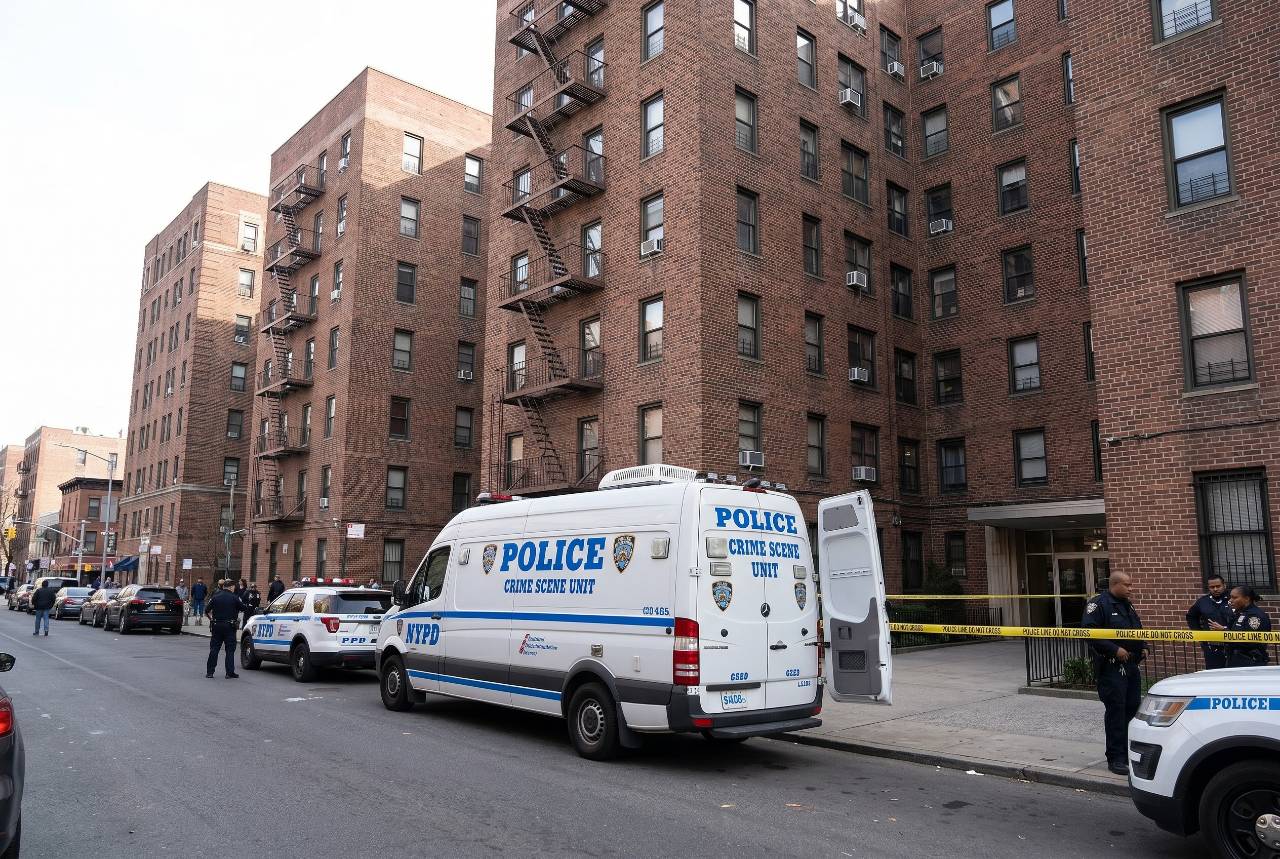
In December 2020, NYPD officers responded to a 911 call at a residence near 13th Avenue and 37th Street in Brooklyn after a 24-year-old woman reported that she had been assaulted and struck with a firearm. When officers arrived at the scene, they arrested the individual and recovered a loaded rifle that police described as an assault-style weapon equipped with a large capacity ammunition feeding device.
The arrest generated significant law enforcement attention at the time, with the NYPD’s commanding officer publicly commending officers for removing the illegal firearm from the street. Our client was subsequently charged with a staggering 12 separate counts spanning five felonies and seven misdemeanor and violation-level offenses.
Lebedin Kofman LLP was retained to defend the case in Brooklyn — Kings County Supreme Court — where our attorneys immediately began building a defense to challenge these serious allegations.
The Charges Our Client Faced
The charging document in this case read like a catalog of some of the most serious criminal offenses in the New York Penal Law. Our client was arraigned on the following counts:
Felony Charges
Criminal Possession of a Weapon in the Second Degree — Penal Law § 265.03(1)(b) — Class C Violent Felony
This was the most serious charge in the case. Under New York Penal Law § 265.03, a person commits criminal possession of a weapon in the second degree when they possess a loaded firearm with intent to use it unlawfully against another person. Often referred to as “CPW 2,” this is one of the most aggressively prosecuted gun charges in New York. A conviction carries a mandatory minimum sentence of 3.5 years in state prison and a maximum of 15 years — even for a first-time offender with no prior criminal record.
Criminal Possession of a Weapon in the Third Degree (Assault Weapon) — Penal Law § 265.02(7) — Class D Violent Felony
Under Penal Law § 265.02(7), it is a class D violent felony to knowingly possess an assault weapon as defined in Penal Law § 265.00(22). The weapon recovered in this case was described by police as an assault-style rifle. A conviction under this section carries a potential sentence of two to seven years in prison. New York’s SAFE Act of 2013 significantly expanded the definition of prohibited assault weapons and the penalties associated with possessing them.
Assault in the Second Degree — Penal Law § 120.05(2) — Class D Violent Felony
The prosecution charged our client with assault in the second degree, alleging that he intentionally caused physical injury to another person by means of a deadly weapon or dangerous instrument. Under this section, the firearm itself can constitute the dangerous instrument. This is a class D violent felony carrying up to seven years in state prison.
Attempted Assault in the Second Degree — Penal Law § 110/120.05(2) — Class E Felony
This charge alleged an attempt to intentionally cause physical injury with a weapon, even if the alleged victim did not sustain the level of injury required for a completed assault charge. As a class E felony, a conviction could result in up to four years of incarceration. Unlike the violent felonies above, attempted assault in the second degree is classified as a non-violent felony under New York sentencing law, meaning probation may be available as an alternative to incarceration.
Criminal Possession of a Firearm — Penal Law § 265.01-b — Class E Felony
Separate from the CPW 2 charge, our client was also charged with the standalone offense of criminal possession of a firearm. Under Penal Law § 265.00(3), “firearm” is defined to include any pistol or revolver, a shotgun with a barrel under 18 inches, a rifle with a barrel under 16 inches, and — notably relevant in this case — any assault weapon. This charge applies to anyone who possesses a firearm without a valid New York license or permit. A class E felony, this charge carries up to four years in prison.
Misdemeanor and Violation-Level Charges
In addition to the five felony counts, our client faced seven additional charges:
Menacing in the Second Degree — Penal Law § 120.14(1) — Class A Misdemeanor. This charge alleged that our client displayed a weapon in a manner that placed another person in reasonable fear of physical injury. A conviction carries up to one year in jail.
Assault in the Third Degree — Penal Law § 120.00(1) — Class A Misdemeanor. The lowest-level assault charge in New York, this alleged that our client intentionally caused physical injury. It carries up to one year in jail.
Criminal Obstruction of Breathing — Penal Law § 121.11 — Class A Misdemeanor. This charge, frequently seen in domestic violence cases, alleged the application of pressure to the throat or neck area. A conviction carries up to one year in jail.
Unlawful Possession of a Large Capacity Ammunition Feeding Device — Penal Law § 265.36 — Class A Misdemeanor. Under this section (which was in effect at the time of the 2020 arrest), it was unlawful to knowingly possess an ammunition feeding device capable of accepting more than ten rounds. This was classified as a class A misdemeanor carrying up to one year in jail. (Note: PL § 265.36 was subsequently repealed in 2022, and large capacity feeding device possession is now addressed exclusively under the felony provisions of PL § 265.02(8).)
Attempted Assault in the Third Degree — Penal Law § 110/120.00(1) — Class B Misdemeanor. Carrying up to 90 days in jail.
Harassment in the Second Degree — Penal Law § 240.26(1) — Violation. The least serious charge, carrying up to 15 days in jail.
NYC Administrative Code Violation — LOC 10-131 — Unclassified Misdemeanor. This local law violation relates to the possession of firearms or ammunition within New York City without a valid NYC-issued license.
What Was at Stake: Potential Penalties
The cumulative exposure our client faced was severe. The CPW 2 charge alone — a class C violent felony — carried a mandatory minimum of 3.5 years and a maximum of 15 years in state prison. Under New York’s sentencing framework for violent felonies as outlined in Penal Law § 70.02, there is no option for probation or a conditional discharge on a class C violent felony conviction. Prison time is mandatory.
When you add up the potential consecutive sentences across all five felony counts, our client was realistically facing the possibility of decades in prison. Beyond incarceration, a felony weapons conviction in New York carries devastating collateral consequences: a permanent criminal record, loss of voting rights while incarcerated, barriers to employment and housing, and for non-citizens, almost certain deportation proceedings.
How Felony Gun Cases Are Defended in Brooklyn
Kings County — Brooklyn — is one of the busiest criminal courts in New York State, and the Kings County District Attorney’s Office prosecutes gun cases aggressively. Securing a full dismissal on charges this serious requires a defense that challenges the prosecution’s case from multiple angles.
While the specific defense strategy in any case is confidential, gun possession and assault cases in New York generally present several categories of potential legal challenges:
Challenging the Search and Seizure. The Fourth Amendment to the U.S. Constitution and Article I, Section 12 of the New York State Constitution protect individuals against unreasonable searches and seizures. If officers entered a home without a valid warrant, without consent, and without exigent circumstances justifying a warrantless entry, any evidence recovered — including the firearm — may be suppressed. New York courts have consistently held that the fruits of an illegal search cannot be used against a defendant. A successful suppression motion under CPL § 710.20 can dismantle the prosecution’s entire case.
Questioning the Complainant’s Credibility. In cases that originate from a 911 call by an alleged victim, the prosecution’s case often hinges heavily on that person’s testimony. If the complainant’s account is inconsistent, contradicted by physical evidence, or influenced by a motive to fabricate — such as an ongoing domestic dispute — a skilled defense attorney can expose those weaknesses at a suppression hearing or trial.
Challenging Constructive Possession. Under Penal Law § 265.15, New York law creates certain presumptions regarding weapon possession. However, the prosecution must still prove beyond a reasonable doubt that the defendant knowingly exercised dominion and control over the weapon. If the firearm was located in a shared residence or common area, the defense may argue that mere proximity does not establish possession.
Operability of the Firearm. For a CPW 2 conviction under PL § 265.03, the prosecution must prove that the firearm was loaded and operable — meaning it was capable of discharging ammunition. If the weapon was non-functional, a critical element of the charge cannot be proven.
Assault Element Defenses. The assault charges required the prosecution to prove that our client intentionally caused physical injury. “Physical injury” is a defined term under Penal Law § 10.00(9) — it means impairment of physical condition or substantial pain. If the alleged victim did not sustain injuries meeting this threshold, or if the defendant’s intent cannot be established, the assault charges may not survive scrutiny.
The Outcome: Complete Dismissal of All Charges
After an aggressive defense, Lebedin Kofman LLP secured a full dismissal of every charge — all five felonies, all seven misdemeanor and violation-level charges, twelve counts in total. Our client walked away with no conviction, no prison sentence, no probation, and no criminal record from this case.
This outcome is one that many defendants in similar situations are told is impossible. When you are facing a dozen charges including a class C violent felony with a mandatory prison sentence, the pressure to accept a plea deal can feel overwhelming. Our attorneys refused to accept that outcome for our client and instead fought the case until every charge was dismissed.
This case is part of Lebedin Kofman’s track record of successful outcomes in serious weapons and violent crime cases throughout New York City, including other gun possession dismissals in Manhattan and complex weapon cases across the five boroughs.
Why Experienced Legal Representation Matters in Gun Cases
New York has some of the strictest firearm laws in the country. The combination of mandatory minimum sentences, aggressive prosecution, and the sheer number of charges that can stem from a single incident means that gun cases carry stakes that few other criminal matters can match. A defendant who does not have an experienced attorney reviewing every piece of evidence, filing the right motions, and holding the prosecution to its burden of proof will almost certainly face a worse outcome.
At Lebedin Kofman LLP, our legal team has defended clients facing the full spectrum of weapons charges in every borough of New York City and on Long Island. We understand how gun cases are investigated, how they are prosecuted, and — most importantly — how to beat them.
Frequently Asked Questions
What is Criminal Possession of a Weapon in the Second Degree in New York?
CPW 2 under Penal Law § 265.03 is a class C violent felony. The most commonly charged subsection — PL § 265.03(3) — makes it illegal to possess any loaded firearm outside of your home or place of business. The more serious subsection — PL § 265.03(1)(b) — adds the element of intent to use the loaded firearm unlawfully against another person. Both carry a mandatory minimum of 3.5 years in state prison.
Can felony gun charges be dismissed in New York?
Yes. While gun cases are prosecuted aggressively, they can be dismissed if the defense identifies constitutional violations (such as an unlawful search), insufficiency in the evidence, or problems with witness credibility. The dismissal in this Kings County case involved multiple felony and misdemeanor charges, demonstrating that even the most serious cases can be defeated.
What is an assault weapon under New York law?
New York Penal Law § 265.00(22) provides a detailed definition of “assault weapon” that includes semiautomatic rifles, pistols, and shotguns with certain enumerated features. Possessing an assault weapon is a class D violent felony under PL § 265.02(7), punishable by up to seven years in state prison.
What is a large capacity ammunition feeding device?
Under New York law, a large capacity ammunition feeding device is any magazine, belt, drum, or similar device that can accept more than ten rounds of ammunition. Possession of such a device is a felony under current law (PL § 265.02(8)). At the time of this 2020 case, a misdemeanor provision under PL § 265.36 also applied to certain pre-1994 devices.
What should I do if I am arrested on gun charges in Brooklyn?
Do not make any statements to police beyond identifying yourself. Exercise your right to remain silent and your right to an attorney. Contact an experienced Brooklyn criminal defense lawyer immediately. The earlier your attorney can begin reviewing the evidence and identifying potential defenses, the stronger your position will be.
Contact Lebedin Kofman LLP
If you or a loved one is facing gun charges, assault charges, or any criminal case in Kings County or anywhere in New York City, contact Lebedin Kofman LLP today for a free and confidential consultation. We are available 24/7 and have a proven record of fighting and winning serious felony cases.