


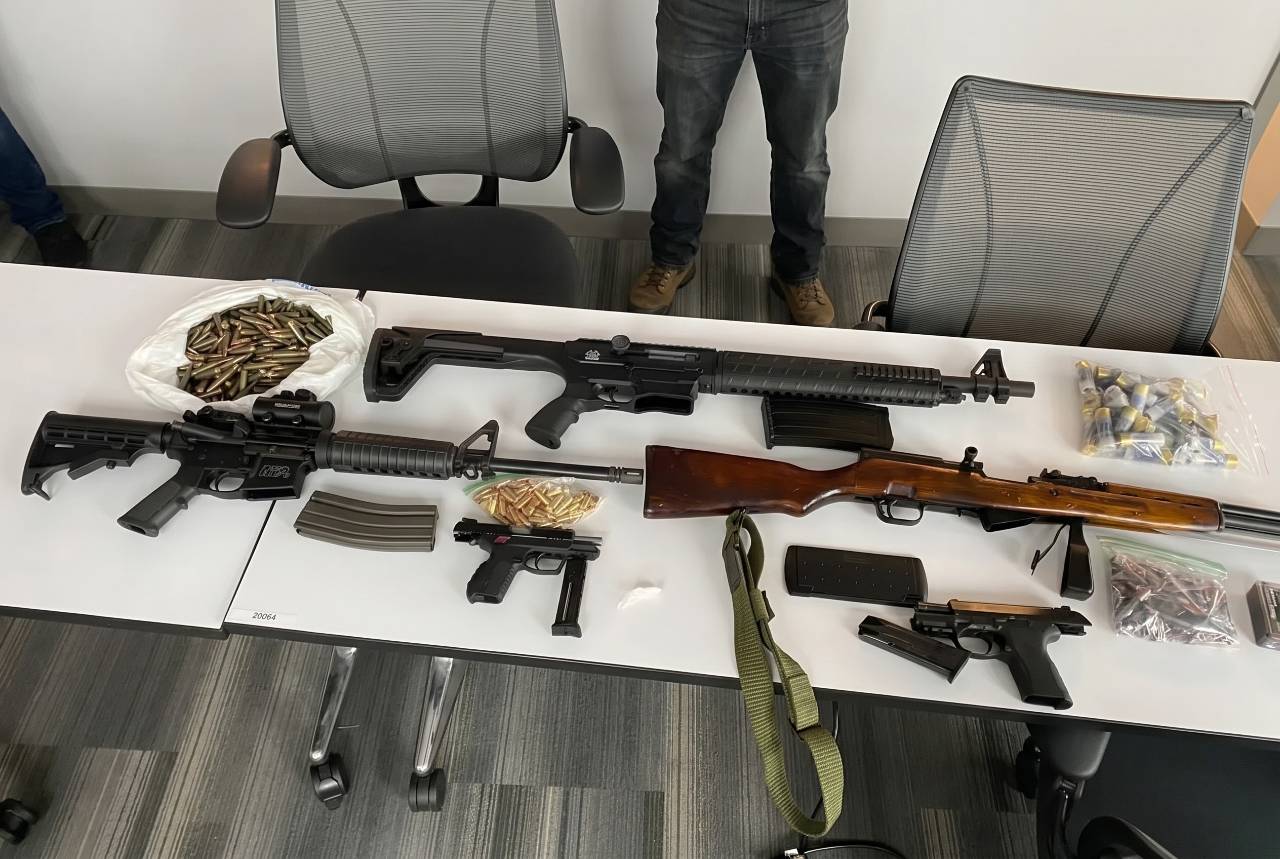
In November 2021, 24-year-old Yamil Torres-Rincon was arrested in Harlem following a months-long undercover sting operation conducted by the New York Organized Crime Drug Enforcement Strike Force. Lebedin Kofman LLP was retained to defend Mr. Torres-Rincon, who was arraigned in Manhattan Criminal Court and held on $150,000 bail facing one of the most serious firearms indictments a defendant can receive under New York law.
According to prosecutors led by Special Narcotics Prosecutor Bridget G. Brennan, Torres-Rincon — an Atlanta, Georgia resident — met with an undercover officer posing as a buyer on four separate occasions between September 3 and November 12, 2021. Over the first three meetings, he allegedly sold a total of 20 handguns and three assault weapons, along with an unspecified quantity of cocaine, for approximately $42,900. During the fourth and final transaction, Torres-Rincon allegedly attempted to sell two additional AR-15 Palmetto assault weapons and hundreds of rounds of ammunition for $19,500, but also tried to pass off nine air pistols as genuine Glock handguns. When the undercover officer identified the air pistols, Torres-Rincon allegedly attempted to flee and was apprehended at the corner of West 133rd Street and Old Broadway.
In total, law enforcement seized 25 firearms — 20 handguns and five assault weapons — along with the nine air pistols recovered during the final transaction. The NYPD determined that some of the seized firearms were stolen.
Prosecutors alleged that Torres-Rincon drove the weapons from Georgia before each meeting, at times concealing them in a hidden compartment in his vehicle. Wiretap evidence also allegedly revealed negotiations for larger narcotics transactions beyond what was sold during the controlled buys.
The Charges in the Indictment
The indictment returned against Torres-Rincon in New York County reflects the full severity of New York’s firearms trafficking statutes. The charges included:
Criminal Sale of a Firearm in the First Degree (PL § 265.13) — one count, a class B violent felony. This is the most serious firearm sale charge in New York. Under PL § 265.13, a person commits this offense by unlawfully selling ten or more firearms in a single transaction, or by selling a total of three or more firearms to one or more people within a one-year period. Torres-Rincon allegedly sold 25 firearms across four transactions over roughly ten weeks, exceeding both prongs of this statute by a wide margin.
Criminal Sale of a Firearm in the Second Degree (PL § 265.12) — multiple counts, each a class C violent felony. Under PL § 265.12, this charge applies when a person unlawfully sells five or more firearms in a single transaction, or sells a total of two or more firearms to one or more people within a one-year period. The multiple counts reflected the structure of the individual transactions, each of which involved volumes that independently satisfied this statute.
Criminal Sale of a Firearm in the Third Degree (PL § 265.11) — one count, a class D violent felony. This baseline firearm sale offense applies to any unauthorized person who sells, exchanges, gives, or disposes of a firearm or possesses one with the intent to sell it.
Criminal Possession of a Weapon in the Third Degree (PL § 265.02(7)) — thirteen counts, each a class D felony. These counts related specifically to the assault weapons — the AR-15-style rifles — allegedly possessed and transacted across the four meetings. Under New York law, assault weapons are defined broadly in PL § 265.00(22) to include semiautomatic rifles with detachable magazines and certain military-style features.
Criminal Sale of a Controlled Substance in the Third Degree (PL § 220.39(1)) — one count, a class B felony. This charge stemmed from the alleged cocaine sale during one of the meetings and the wiretap evidence suggesting negotiations for larger drug transactions.
The combined indictment represented enormous sentencing exposure. If you or someone you know is facing gun charges in New York, understanding the legal framework behind these offenses is critical to mounting an effective defense.
How New York Law Classifies Firearm Sale Offenses
New York’s Penal Law Article 265 creates a tiered system for prosecuting the illegal sale of firearms. The severity of the charge depends primarily on the number of weapons involved and whether the sales occurred in a single transaction or over a period of time.
All three degrees of criminal sale of a firearm — sections 265.11, 265.12, and 265.13 — are classified as violent felony offenses under Penal Law § 70.02. This classification carries consequences that go far beyond the prison sentence itself. Violent felony convictions require mandatory determinate prison terms with no option for probation in most circumstances. They cannot be sealed under New York’s record-sealing statute (CPL § 160.59). And a prior violent felony conviction dramatically increases the mandatory minimum on any future offense under PL § 70.04.
The third-degree charge under PL § 265.11 functions as the entry point — it requires only a single unauthorized sale or intent to sell. The second-degree charge under PL § 265.12 has two prongs: selling five or more firearms in a single transaction, or selling two or more cumulatively within a year. The first-degree charge under PL § 265.13 similarly has two prongs: selling ten or more in a single transaction, or three or more cumulatively within a year. In a trafficking case involving repeated transactions over time, prosecutors can — and routinely do — charge across all three tiers simultaneously, as they did in this case.
Sentencing Exposure for Firearm Trafficking Convictions
The sentencing ranges under PL § 70.02(3) for first-time violent felony offenders are mandatory and determinate, meaning the judge imposes a fixed number of years rather than a range. For a class B violent felony like first-degree criminal sale of a firearm, the term must be at least five years and can reach twenty-five years in state prison. For a class C violent felony like second-degree sale, the range is three and a half to fifteen years. For a class D violent felony like third-degree sale or assault weapon possession, the range is two to seven years.
Each sentence also includes a mandatory period of post-release supervision following the prison term. Whether multiple sentences run concurrently or consecutively is a matter of judicial discretion under PL § 70.25, and prosecutors in trafficking cases frequently argue for consecutive terms. When a defendant faces counts across multiple degrees — as Torres-Rincon did — the total cumulative exposure can reach decades.
For those navigating what an indictment means in practical terms, our article on whether an indictment means jail time in New York provides additional context.
How Sting Operations Work — and Where They Can Be Challenged
Gun trafficking prosecutions in New York City frequently rely on undercover sting operations run by multi-agency task forces like the Organized Crime Drug Enforcement Strike Force. The typical pattern involves an undercover officer or confidential informant initiating contact with a suspected dealer, conducting a series of controlled buys over weeks or months while documenting each transaction, and then arresting the target after accumulating enough volume to support the higher-degree sale charges.
From a prosecution standpoint, this approach is powerful because it allows the government to build volume — crossing the statutory thresholds that elevate the charges from a class D felony to a class C or B felony. Under the current law, even two cumulative sales within a year can support a second-degree charge, and three can support a first-degree charge. From a criminal defense standpoint, however, sting operations also present real vulnerabilities.
Entrapment. Under Penal Law § 40.05, entrapment is an affirmative defense where the defendant was induced or encouraged by law enforcement to commit a crime they were not predisposed to commit. In cases where undercover officers initiated contact, set the terms, and provided the opportunity and financial motivation for the sales, entrapment can be a viable defense — though the prosecution will argue predisposition if the defendant readily participated.
Suppression of wiretap and surveillance evidence. Wiretap evidence must comply with strict procedural requirements under both federal law and CPL § 700.05. If law enforcement failed to obtain proper judicial authorization or exceeded the scope of an authorized wiretap, the resulting evidence may be subject to suppression under CPL Article 710.
Challenging the firearm classification. The Torres-Rincon case illustrates an important nuance: not everything that looks like a gun qualifies as a “firearm” under New York law. Air pistols that use compressed air rather than an explosive charge to propel a projectile do not typically meet the statutory definition in PL § 265.00(3), which covers pistols, revolvers, short-barreled shotguns and rifles, and assault weapons. If the prosecution cannot prove that the items sold meet this definition, the sale counts tied to those items may fail.
Chain of custody and identification. In cases involving multiple transactions over an extended period, the prosecution must establish that the defendant conducted each sale and that the firearms recovered are the same weapons allegedly transacted. Gaps in documentation or handling can undermine specific counts.
Negotiated dispositions. Even where the evidence is strong, experienced defense counsel may be able to negotiate reduced charges that avoid the violent felony designation or secure a more favorable sentencing recommendation. This requires detailed knowledge of both the statutory framework and the practices of the particular court and prosecutor’s office handling the case.
Interstate Trafficking and Federal Exposure
Cases involving weapons transported from other states into New York carry an additional layer of risk: potential federal prosecution. Bringing firearms across state lines with the intent to sell them without a federal firearms license can violate 18 U.S.C. § 922(a), and doing so in connection with drug trafficking can trigger enhanced penalties under 18 U.S.C. § 924(c). Federal firearms charges carry their own mandatory minimum sentences that can run consecutive to any state sentence.
New York’s licensing framework under PL § 400.00 compounds the issue. Virtually all handgun possession in the state requires a license, and licenses are issued on a may-issue basis — by the NYPD commissioner in New York City, the police commissioner in Nassau County, and the sheriff in Suffolk County. An out-of-state defendant without a New York license is by definition an unauthorized possessor, which is the exact predicate for the third-degree sale charge under PL § 265.11.
For those concerned about whether federal charges can be resolved after indictment, our article on dropping federal charges after an indictment in New York covers that process in detail.
Frequently Asked Questions About Gun Trafficking Charges in New York
What is the difference between criminal sale of a firearm in the first, second, and third degree?
The distinction is based on volume, and each statute has two separate prongs. Third-degree sale under PL § 265.11 covers any unauthorized sale of even a single firearm or possession with intent to sell. Second-degree sale under PL § 265.12 applies when five or more firearms are sold in a single transaction, or when a total of two or more are sold within a one-year period. First-degree sale under PL § 265.13 applies when ten or more are sold in a single transaction, or when a total of three or more are sold within a year. The felony class increases from D to C to B, with each tier carrying higher mandatory prison sentences.
Is criminal sale of a firearm a violent felony in New York?
Yes. All three degrees are classified as violent felony offenses under Penal Law § 70.02, which means conviction requires a mandatory determinate prison sentence and the conviction cannot be sealed.
What is the minimum sentence for a gun trafficking conviction?
For a first-time offender, the minimum determinate sentence is two years for a class D violent felony (third-degree sale), three and a half years for a class C violent felony (second-degree sale), and five years for a class B violent felony (first-degree sale). These are state prison sentences, not county jail.
Can air guns or air pistols result in firearm charges?
Generally, no. PL § 265.00(3) defines “firearm” to include pistols, revolvers, short-barreled shotguns and rifles, and assault weapons — all of which use explosive charges. Air pistols that use compressed air typically fall outside this definition, though the circumstances surrounding their sale or possession may support other charges.
Can entrapment be used as a defense in a sting operation?
Yes. Under PL § 40.05, entrapment is an affirmative defense where the defendant was induced by law enforcement to commit a crime they were not predisposed to commit. Whether entrapment applies is highly fact-specific and often turns on the nature of law enforcement’s involvement in initiating the criminal conduct versus the defendant’s own predisposition.
What happens if firearms are transported into New York from another state?
Interstate trafficking can result in both state and federal charges. New York’s strict licensing requirements make any unlicensed possession or sale a felony, and federal law prohibits transporting firearms across state lines for sale without a federal firearms license. When drug trafficking is also involved, enhanced federal penalties under 18 U.S.C. § 924(c) may apply.
Contact Lebedin Kofman LLP
Gun trafficking charges carry some of the most severe penalties in New York’s criminal code. If you or someone you know is facing charges for criminal sale of a firearm, criminal possession of a weapon, or related offenses anywhere in New York City, Nassau County, or Suffolk County, our legal team has the experience to evaluate the evidence, identify weaknesses in the prosecution’s case, and fight for the best possible outcome. Contact us today for a free consultation.
What can matter in a Manhattan gun-smuggling or trafficking-sting defense?
Gun-smuggling and trafficking-sting allegations can involve possession proof, alleged transportation or transfer evidence, search-and-seizure issues, statements, digital records, cooperating-witness reliability, forensic issues, chain of custody, and whether prosecutors can connect each alleged act to the charged offense. Every case is fact-specific, and prior results do not guarantee a similar outcome.
- Request a confidential gun charge consultation
- New York gun charges defense
- Criminal possession of a weapon in the second degree
- Criminal possession of a weapon in the first degree
- Manhattan gun charge lawyer
- Related Manhattan gun-possession case result
- Recent case results
Attorney Advertising. Prior results do not guarantee a similar outcome.