
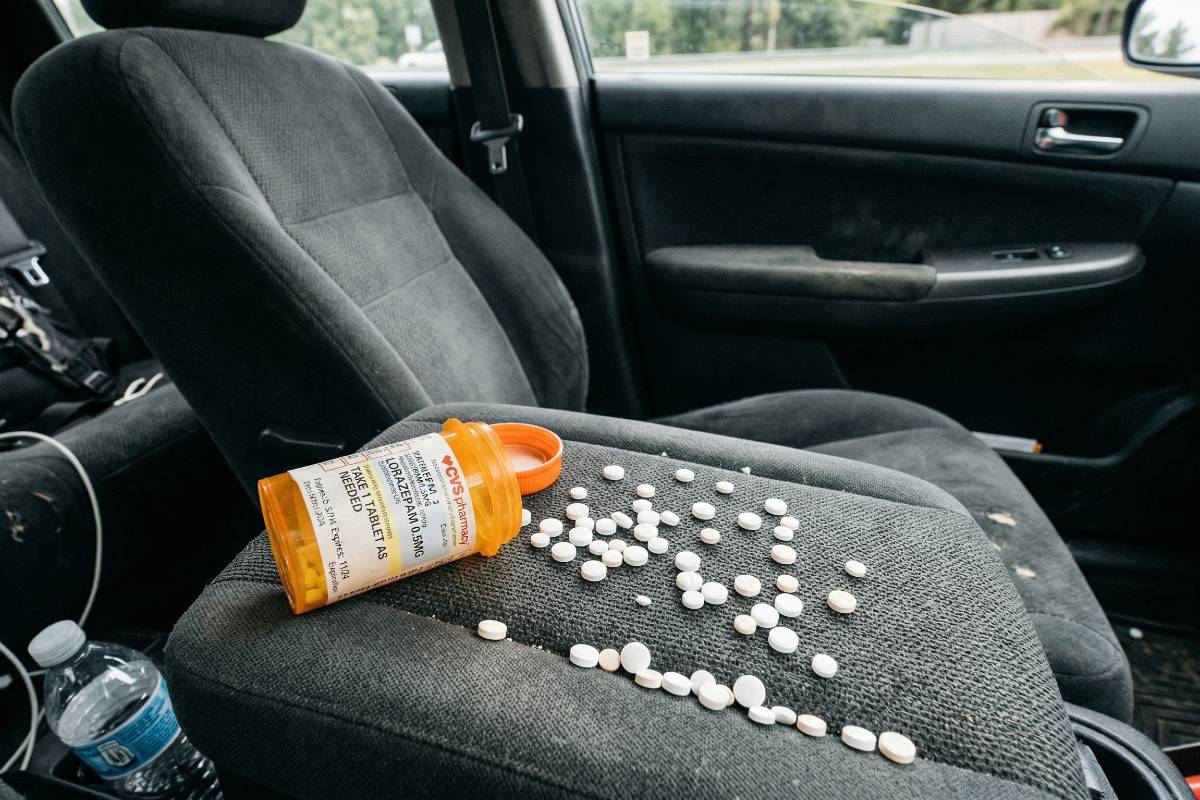
You Took It As Prescribed. You Can Still Be Charged.
Millions of New Yorkers legally take prescription opioids, sleep aids, benzodiazepines, and muscle relaxants every day. What most of them don’t realize is that a valid prescription provides absolutely no legal protection if the drug impaired their ability to drive.
Drug-impaired driving is a growing enforcement priority across New York State. Data from the New York State Institute for Traffic Safety Management and Research (ITSMR) shows that narcotic analgesics — prescription opioid-type drugs — were detected in 50% of drivers who tested positive for any active drug in blood specimens collected during Drug Recognition Expert evaluations in 2021, up sharply from 38% in 2019. Statewide crash data from the ITSMR December 2024 fact sheet found that drug-related drivers were involved in 16–25% of all traffic fatalities in New York between 2019 and 2023.
This article explains what the law actually says, how police prove drug impairment without a breathalyzer, what the penalties are, and why early legal counsel is essential for anyone facing these charges in New York City, Nassau County, or Suffolk County.
Two Charges, One Common Mistake
New York’s drug-impaired driving law is found in Vehicle and Traffic Law (VTL) § 1192, and it creates two distinct charges that apply to prescription drug situations. Drug-impaired driving charges are more common than many defendants expect — a pattern that mirrors broader trends in New York DWI enforcement.
DWAI–Drugs: VTL § 1192(4)
The statute provides that no person shall operate a motor vehicle while their ability to operate that vehicle is impaired by the use of a drug. The operative standard is “impaired to any extent” — a lower bar than the full intoxication standard applied in alcohol-based DWI cases.
To sustain a conviction, the prosecution must prove three elements: that the defendant operated a motor vehicle, that the substance in their system was a “drug” as defined under VTL § 114-a, and that the drug impaired their ability to drive. The Criminal Jury Instructions for VTL § 1192(4) make clear that unlike alcohol-based DWI per se (VTL § 1192(2)), there is no numerical threshold for drug impairment — no equivalent of a 0.08% BAC. Impairment is instead established through officer observation, Drug Recognition Expert evaluation, and toxicology results.
DWAI–Combination: VTL § 1192(4-a)
This charge applies when a driver is impaired by the combined influence of drugs, or of alcohol and any drug or drugs. It captures situations where neither the alcohol level alone nor the drug amount alone would support a separate charge, but the combination produces observable impairment. A first offense is a misdemeanor; a second conviction within ten years elevates the charge to a Class E felony.
What Counts as a “Drug” Under This Law
VTL § 114-a defines “drug” to include any substance listed in Public Health Law (PHL) § 3306 — New York’s controlled substance schedule — and cannabis or concentrated cannabis as defined in Penal Law § 222.00. This definition is critical because it creates a significant legal loophole that prosecutors, legislators, and law enforcement are actively trying to close.
The List That Determines Your Legal Exposure
New York’s controlled substance schedules under PHL § 3306 are organized into Schedules I through V. Prescription drugs that frequently appear in DWAI-Drugs cases include:
Opioid pain relievers such as oxycodone (OxyContin), hydrocodone (Vicodin), codeine, fentanyl, and morphine are classified as Schedule II substances. Benzodiazepines prescribed for anxiety and sleep — including alprazolam (Xanax), diazepam (Valium), lorazepam (Ativan), and clonazepam (Klonopin) — fall under Schedule IV. Sleep aids like zolpidem (Ambien), muscle relaxants like carisoprodol (Soma), and tramadol (Ultram) are also Schedule IV. Stimulants prescribed for ADHD, including amphetamine salts (Adderall) and methylphenidate (Ritalin), are Schedule II.
It is worth noting that hydrocodone (commonly prescribed as Vicodin or Lortab) was reclassified to Schedule II in New York in 2013, according to the NY Office of the Professions advisory on § 3306 changes, placing it among the most controlled prescription drugs under the statute.
The ITSMR toxicology data from 2021 found that narcotic analgesics (including fentanyl, oxycodone, and hydrocodone) and CNS depressants (benzodiazepines, Ambien, Soma) were among the most commonly detected drug categories in New York DRE blood specimens.
What Happens When the Drug Isn’t on the List
New York is one of only four states in the nation that restricts DWAI-Drugs charges to substances specifically listed in PHL § 3306. This means that if a driver is visibly impaired by a substance that is not on the schedule — such as propofol, nitrous oxide, xylazine, or many emerging synthetic drugs — law enforcement cannot charge them with DWAI-Drugs under current law, regardless of how impaired they appear.
This gap has drawn significant attention from prosecutors across the state. Suffolk County District Attorney Ray Tierney has been a leading voice for reform, joining a coalition of New York District Attorneys and victims’ families at the State Capitol to rally for passage of the Deadly Driving Bill and publicly describing this as a dangerous loophole. Nassau County District Attorney Anne T. Donnelly has also publicly supported closing this gap, and the NY STOP-DWI Association has made the issue a legislative priority.
The pending legislation — NY Senate Bill S5457A, known as the “Deadly Driving Bill” — would amend VTL § 114-a to define “drug” as any substance or combination of substances that impair, to any extent, physical or mental abilities, eliminating the list-based restriction. As of early 2026, the bill remains in committee.
For drivers taking prescription medications, the practical takeaway is clear: under current law, the § 3306 list still controls what triggers a DWAI-Drugs charge. Any prescription drug on that list carries full legal exposure today. But the law may change, and the legislative momentum strongly favors expansion.
No Breathalyzer for Drugs — Here’s What Officers Use Instead
Roadside Observations
Unlike alcohol, there is no roadside equivalent of a breathalyzer for prescription drugs. Officers at the scene rely on trained observation: slurred speech, constricted or dilated pupils, impaired coordination, drooping eyelids, slow reaction time, disorientation, unusual eye movement, and inability to complete standard field sobriety tests such as the walk-and-turn, one-leg stand, and horizontal gaze nystagmus test.
The Drug Recognition Expert (DRE) Program
When impairment is suspected but alcohol does not explain the level of apparent impairment, a Drug Recognition Expert officer is called in. New York has participated in the Drug Evaluation and Classification (DEC) Program since 1987, operating under the guidance of the International Association of Chiefs of Police (IACP) and supported by NHTSA. The Governor’s Traffic Safety Committee manages the program through the SafeNY DRE coordinator network, and as of 2021, there were approximately 300 or more certified DRE officers statewide.
DRE certification is demanding. It involves over 80 hours of classroom instruction, more than 40 hours of field certification, and a minimum of 12 supervised evaluations — each of which must be confirmed by toxicology results.
The 12-Step DRE Evaluation Protocol
The DRE evaluates the driver through a standardized 12-step process approved by NHTSA and the IACP. The evaluation begins with a breath alcohol test to confirm that alcohol alone doesn’t explain the impairment, followed by an interview with the arresting officer and a preliminary examination including a first pulse measurement.
The DRE then conducts a series of eye examinations — testing for horizontal gaze nystagmus, vertical gaze nystagmus, and lack of convergence — followed by divided attention tests (Romberg balance, walk-and-turn, one-leg stand, and finger-to-nose). Vital signs are measured, including pulse, blood pressure, and body temperature. The darkroom examination measures pupil sizes under three different lighting conditions. The DRE also examines muscle tone, checks for injection sites, and records statements from the subject.
Based on these observations, the DRE forms an opinion identifying the probable drug category from one of seven classifications: CNS depressants, CNS stimulants, narcotic analgesics, dissociative anesthetics, cannabis, hallucinogens, or inhalants. A toxicological examination — typically a blood draw — is then performed to confirm the opinion.
The ITSMR data from 2021 showed that cannabis (41%) and narcotic analgesics/opioids (41%) were the two most common drug categories identified by New York DREs, with narcotic analgesics rising sharply from 35% in 2019.
The Role of the Blood Test — and Your Rights
Implied Consent Under VTL § 1194
By operating a motor vehicle in New York, drivers impliedly consent to a chemical test — breath, blood, urine, or saliva — upon lawful arrest for any VTL § 1192 violation. This is codified in VTL § 1194. For suspected drug impairment, a blood test is the standard because urine testing only shows that a drug was consumed at some point and cannot reliably establish impairment at the time of driving — metabolites can remain in urine for days or even weeks.
The two-hour rule under VTL § 1194(2)(a) requires the test be administered within two hours of arrest under implied consent, though courts have carved out exceptions for situations involving express consent.
The Warrant Requirement — Birchfield v. North Dakota (2016)
The U.S. Supreme Court’s decision in Birchfield v. North Dakota, 579 U.S. 438 (2016), drew a constitutional line between breath tests and blood draws. The Court held that warrantless breath tests are constitutionally permissible as a search incident to arrest, but warrantless blood draws are not. Blood requires either a warrant or valid consent. In drug impairment cases — where a breathalyzer is useless — police must either obtain a search warrant for the blood draw or establish that the driver voluntarily consented. The consent process and its circumstances therefore become a critical focus for the defense.
Refusing the Blood Test
A refusal to submit to a chemical test under VTL § 1194 triggers immediate license suspension pending a DMV hearing (typically within 15 days), a separate DMV refusal proceeding independent of the criminal case, and the refusal can be used as evidence against the defendant at trial. The ITSMR data shows that chemical test refusal increased from 13% to 20% of DRE evaluations between 2019 and 2021 in New York.
The Science of Blood Testing
New York crime labs use headspace gas chromatography and mass spectrometry (GC-MS) to identify drugs and active metabolites in blood specimens. A positive blood result showing a PHL § 3306 substance establishes that the drug was present in the driver’s system — but it does not automatically establish impairment. The question of whether the drug caused impairment at the time of driving is a separate and often contested issue. The ITSMR data also found that 58% of drivers with active drugs in their blood in New York DRE cases tested positive for multiple drug categories in 2021.
Penalties: From Six-Month Revocation to Seven Years in Prison
The consequences for DWAI-Drugs and DWAI-Combination convictions are set out in VTL § 1193 and summarized by the NY DMV’s penalty reference page.
A first-offense DWAI-Drugs conviction is a misdemeanor carrying a fine of $500–$1,000, up to one year in jail, and a six-month license revocation. A second offense within ten years is a Class E felony with a fine of $1,000–$5,000, up to four years in prison, and a minimum one-year revocation. A third offense within ten years escalates to a Class D felony, with fines of $2,000–$10,000, up to seven years in prison, and a minimum one-year revocation. DWAI-Combination convictions follow the same penalty structure.
One distinction is particularly important: unlike an alcohol DWAI — which is treated as a traffic infraction on a first offense — a first-offense DWAI-Drugs is a misdemeanor. It is a criminal charge that carries a permanent criminal record. There is no traffic infraction tier for drug impairment.
Additional Financial Consequences
Beyond fines and incarceration, a DWAI-Drugs conviction carries a mandatory court surcharge of $395 for a misdemeanor or $520 for a felony, a Driver Responsibility Assessment of $250 per year for three years ($750 total, assessed separately by the DMV), Impaired Driver Program (IDP) enrollment fees, and potential Ignition Interlock Device requirements depending on the circumstances of the case.
The “Forfeit After Four” Rule
Under DMV regulations that took effect January 3, 2025, four or more alcohol or drug-related driving convictions or chemical test refusals within the applicable period can result in permanent license revocation with no pathway to reinstatement.
Why “I Had a Prescription” Is Not a Defense
This is one of the most common misconceptions about DWI charges in New York — and one of the most legally consequential: VTL § 1192(4) does not ask whether you were legally entitled to use the substance. It asks only whether the substance impaired your ability to drive. Courts in New York have consistently upheld DWAI-Drugs convictions involving validly prescribed medications.
A prescription may be relevant in limited ways — it can establish that the defendant knew what substance they were taking, and in extraordinary circumstances it may support a medical necessity argument. But it is not a standalone defense to the impairment charge.
Tolerance is also not a defense. A long-time opioid patient who has developed tolerance may feel subjectively unimpaired while still exhibiting observable signs of impairment that satisfy the “impaired to any extent” standard.
The NHTSA Drugs and Human Performance Fact Sheets (2024) confirm that commonly prescribed medications impair driving-related cognitive and psychomotor performance — including at therapeutic doses:
Opioids such as oxycodone, fentanyl, and hydrocodone cause sedation, slowed reaction time, impaired coordination, and euphoria. Benzodiazepines including Xanax, Valium, and Ativan produce sedation, balance impairment, and cognitive slowing. Sleep aids like Ambien (zolpidem) can cause residual sedation into the following day, amnesia, and so-called “sleep driving.” Muscle relaxants like Soma (carisoprodol) cause drowsiness, dizziness, and impaired motor control. Even ADHD stimulants such as Adderall and Ritalin, at high doses or in combination with other substances, can produce agitation, cardiovascular effects, and erratic behavior behind the wheel.
Where a Well-Prepared Defense Can Make a Difference
While DWAI-Drugs charges are serious, the prosecution’s burden is not simple to meet. Whether the charge is a standalone DWAI-Drugs or part of a broader vehicular crimes investigation, several defense strategies can be effective depending on the circumstances.
Challenging the Drug Classification
The prosecution must establish that the specific drug detected in the defendant’s blood is listed in PHL § 3306. If the substance is not on the list — or if the substance detected is a metabolite with no independent pharmacological activity — the statutory element may not be satisfied under current law.
Challenging the DRE Evaluation
DRE officers must follow the standardized 12-step NHTSA/IACP protocol precisely. Procedural departures, incomplete steps, or failure to meet certification requirements provide grounds to challenge the DRE opinion at trial. The DRE’s conclusion is an opinion, not a scientific measurement, and is fully subject to cross-examination.
Attacking the Blood Test
Blood must be drawn by a licensed professional and handled according to proper chain-of-custody protocols. The two-hour rule under VTL § 1194(2)(a) and the Birchfield warrant requirements provide procedural grounds for suppression motions if blood was drawn without consent or a valid warrant. Independent expert toxicology analysis of the retained blood sample can challenge the lab’s findings, the thresholds reported, and whether active metabolites — not just inactive ones — were present.
Disputing Causation
Detection of a drug in blood confirms the drug was consumed. It does not establish that it caused the observed impairment at the time of driving. Tolerance, the timing of the last dose, and pharmacokinetic factors — how the specific drug is absorbed, metabolized, and eliminated — are all legitimate scientific challenges. An experienced forensic toxicologist can testify to whether the blood level found is consistent with therapeutic use and whether the drug was likely below the threshold for behavioral effects.
Challenging the Traffic Stop
All evidence flows from a lawful stop. If the traffic stop lacked reasonable suspicion, or if the arrest lacked probable cause, suppression of all downstream evidence — including the blood test itself — may be available.
Parsing Causation in Combination Cases
In DWAI-Combination cases under VTL § 1192(4-a), if the defense can demonstrate that neither the alcohol level nor the drug level individually satisfies the impairment standard, and the prosecution cannot establish that the combination was the actual cause of observable impairment, the charge may not be sustained.
Local Enforcement, Local Stakes
Suffolk County
Suffolk County DA Ray Tierney has made drugged driving a signature enforcement priority, leading a coalition of prosecutors and victims’ families to rally at the State Capitol for passage of the Deadly Driving Bill and actively lobbying for expansion of New York’s drugged driving laws. Suffolk County’s SAFE-T Team (Selective Alcohol Fatality Enforcement Team) conducts joint DWI/drug impairment operations with the SCPD, Suffolk Sheriff’s Office, and New York State Police. Felony DWAI-Drugs cases are heard at Suffolk County Court in Riverhead; misdemeanor cases are processed at district courts in Central Islip, Hauppauge, and other locations.
Nassau County
Nassau County DA Anne T. Donnelly has co-signed support for the Deadly Driving Bill and has been vocal about the need to close the current loophole in New York’s drug-impaired driving laws. The Nassau County Police Department actively prosecutes DWAI-Drugs cases — including prescription drug cases — through the county’s STOP-DWI program.
New York City
NYC’s five borough District Attorneys operate under the same VTL § 1192(4) framework. The NYPD has its own DRE-trained officers. DWAI-Drugs misdemeanors are processed through Criminal Court; felonies are heard in Supreme Court. Participants in the Impaired Driver Program (IDP) can access the program through state DMV offices in the boroughs.
New York’s STOP-DWI program is funded entirely by DWI/DWAI conviction fines, and all 62 counties participate, with the five NYC boroughs operating as one combined program.
The Window for an Effective Defense Closes Quickly
License suspension begins at arraignment or shortly after arrest under New York’s Prompt Suspension Law. Understanding what happens after a DWI arrest is critical — for many Long Island and New York City residents whose daily lives depend on a car, this is the most immediately devastating consequence.
Blood specimens have a finite shelf life. Defense counsel must move quickly to request independent testing of the retained blood sample before it degrades or is destroyed. Suppression motions challenging the warrant or consent basis for the blood draw, the DRE protocol, and the legality of the traffic stop must be filed at specific pretrial stages — and the deadlines are unforgiving.
The criminal case and the DMV revocation proceeding run on independent timelines, and both require simultaneous attention. A conviction for DWAI-Drugs is a permanent criminal record in New York — there is no expungement.
If you or someone you know is facing a prescription drug DWI charge in New York City, Nassau County, or Suffolk County, contact Lebedin Kofman LLP for a consultation. An attorney familiar with local courts, the DRE officers who testify in these cases, and the forensic labs that process drug specimens can evaluate whether the blood evidence, the DRE opinion, and the stop itself can be challenged — and the sooner that evaluation begins, the more options remain available.
This article is for educational purposes only and does not constitute legal advice. New York law changes frequently, and the application of these statutes depends on specific factual circumstances. Please consult a qualified attorney for guidance about your individual situation.