
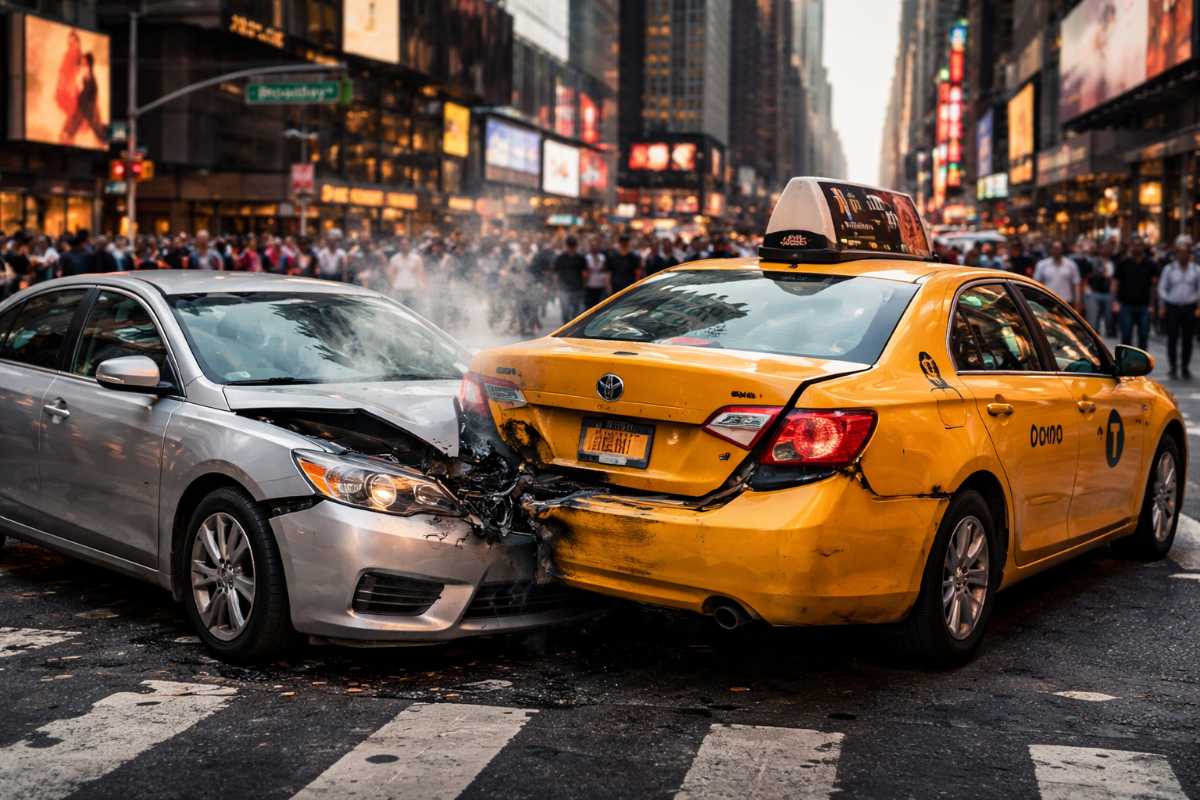
If you are under investigation or have been charged with leaving the scene of an accident in New York City or Long Island, understanding how the law classifies your case is the first step toward protecting your rights.
What Does “Leaving the Scene” Mean Under New York Law?
In New York, what most people call a “hit and run” is formally known as “leaving the scene of an incident without reporting.” The law does not require that you caused the accident — only that you were involved in one and failed to fulfill certain duties before driving away. Those duties include stopping your vehicle, identifying yourself, sharing your insurance information, and, when necessary, reporting the incident to police.
New York treats these cases with particular seriousness. When a driver leaves the scene, injured victims may not receive timely medical attention, and law enforcement faces significant obstacles in piecing together what happened. For these reasons, the consequences escalate sharply depending on the circumstances — the same act of driving away can be a non-criminal traffic infraction, a misdemeanor, or a felony.
The statute that governs all of this is New York Vehicle and Traffic Law § 600, and if you are a driver in Manhattan, Brooklyn, Queens, the Bronx, Staten Island, Nassau County, or Suffolk County, understanding how it works is essential.
The Legal Framework: VTL § 600
Vehicle and Traffic Law § 600 is New York’s central statute addressing what happens when a driver leaves the scene of an accident without reporting it. The statute divides cases into two main categories based on the type of harm involved:
Subdivision 1 covers incidents involving property damage only — no one was physically hurt. Subdivision 2 covers incidents where another person suffered a personal injury.
Within those two categories, the severity of the charge depends on the extent of the damage or injury, the driver’s specific conduct, and whether the driver has any prior convictions under the same statute.
What the Law Requires You to Do After an Accident
Regardless of whether the accident involves property damage or personal injury, VTL § 600 imposes a set of affirmative obligations on every driver involved in an incident. Before leaving the scene, you must:
- Stop your vehicle at or near the location where the incident occurred.
- Exhibit your driver’s license and insurance identification card when required by law.
- Provide your full name, residence (including street and number), insurance carrier, policy information, and license number to the other party involved, the injured person, or a police officer at the scene.
- Report the incident as soon as physically able to the nearest police station or judicial officer if the other party, property owner, or a police officer is not present at the scene.
The statute also includes specific provisions for drivers operating vehicles through transportation network companies (such as rideshare services) and peer-to-peer car-sharing arrangements, who must additionally disclose their status and applicable insurance coverage.
Property Damage Only: A Traffic Infraction
When VTL § 600(1) Applies
The least severe category under the statute involves accidents that cause damage only to another person’s real property or personal property — with no physical injury to any person. Common examples include striking a parked vehicle, backing into a fence or mailbox, or damaging a storefront entrance.
Under VTL § 600(1)(a), the driver must stop, show their license and insurance card when required, and share their identifying and insurance information with the property owner. If the property owner is not present, the driver is required to report the incident to the nearest police station as soon as physically able.
Penalties
A violation of VTL § 600(1)(a) is classified as a traffic infraction — not a crime. However, the consequences are still meaningful:
- A fine of up to $250
- Up to 15 days in jail
- Or both
Beyond the statutory penalties, a conviction can result in points added to your DMV driving record and increased insurance premiums. The New York DMV provides guidance on how points accumulate and the administrative consequences that follow, including potential license suspension if enough points are accrued.
Accidents Involving Personal Injury: When It Becomes a Crime
Understanding the Three Levels of Harm
VTL § 600(2) applies whenever a driver knows or has cause to know that another person has been physically injured as a result of the accident. The statute uses three distinct levels of harm to determine how serious the charge will be:
- Personal injury — any bodily injury to another person, regardless of severity.
- Serious physical injury — as defined in Penal Law § 10.00, this includes injuries that create a substantial risk of death, cause serious and protracted disfigurement, or result in protracted impairment of health or the function of any bodily organ.
- Death — the most severe outcome, where the injured person dies as a result of the incident.
The distinction between these three categories is what separates a misdemeanor charge from a felony charge, and it is often the most contested issue in these cases.
The Duty to Stop, Assist, and Report
When personal injury is involved, the obligations under VTL § 600(2)(a) mirror those for property damage cases but carry far greater urgency and legal consequence. The driver must stop, exhibit their license and insurance card, and provide their full identifying and insurance information to the injured party (if practical) and to a police officer. If no officer is present at the scene, the driver must report the incident as soon as physically able to the nearest police station or judicial officer.
These requirements exist to serve a critical public safety purpose: ensuring that injured people receive help and that law enforcement can properly investigate the crash.
Misdemeanor Charges Under VTL § 600(2)
When leaving the scene involves personal injury, the case enters criminal territory. The statute draws a further distinction between two levels of misdemeanor based on the nature of the driver’s failure.
Class B Misdemeanor: Failure to Exhibit or Exchange Information
If the violation results solely from the driver’s failure to exhibit their license and insurance identification card or to exchange the required identifying information — but the driver did stop at the scene — the offense is classified as a Class B misdemeanor.
The statutory penalty includes a fine of not less than $250 and not more than $500, in addition to any other penalties allowed by law. Although this is the less severe misdemeanor classification, it is still a criminal offense that results in a permanent criminal record.
Class A Misdemeanor: Standard Leaving-the-Scene Cases
Any violation of VTL § 600(2)(a) that goes beyond the mere failure to exhibit or exchange information — most commonly, failing to stop at all — is a Class A misdemeanor. This is the charge most people think of when they hear the term “hit and run” involving an injury.
The statutory fine ranges from not less than $500 to not more than $1,000, in addition to any other penalties provided by law. Under New York’s Penal Law sentencing framework, a Class A misdemeanor can carry up to one year in a local jail.
It is important to note that a subsequent violation of VTL § 600(2)(a) — other than a violation that consists solely of the failure to exhibit or exchange information — elevates the offense from a misdemeanor to a Class E felony, which is discussed in the next section. By contrast, a subsequent “mere failure to exhibit or exchange” violation is elevated only to a Class A misdemeanor, not a felony.
How Courts Evaluate These Cases
The New York Criminal Jury Instructions for the misdemeanor version of this charge break the offense into its core elements: the operation of a motor vehicle, knowledge or cause to know that personal injury occurred, and the failure to stop, exhibit identification, and report as required by the statute.
The phrase “knows or has cause to know” is especially significant. It establishes that the prosecution does not need to prove the driver had actual, subjective knowledge of the injury — only that a reasonable person in the same circumstances would have had reason to believe an injury had occurred. This language becomes a focal point in cases where the defense centers on the driver’s claimed lack of awareness.
Felony Charges Under VTL § 600(2)
When the circumstances are more severe — involving serious injuries, death, or a prior record — leaving the scene of an accident becomes a felony in New York. The consequences at this level are life-altering.
Class E Felony
A violation of VTL § 600(2)(a), other than the mere failure to exhibit or exchange information, is elevated to a Class E felony in two situations:
Prior conviction: The driver has previously been convicted of a VTL § 600(2)(a) violation and commits a new violation. The statutory fine ranges from $1,000 to $3,000, in addition to other penalties provided by law.
Serious physical injury: The personal injury sustained by the victim meets the legal definition of “serious physical injury” under Penal Law § 10.00. The statutory fine ranges from $1,000 to $5,000, in addition to other penalties provided by law.
Because these are felony convictions, sentencing may include state prison terms under the Penal Law’s provisions for Class E felonies, which carry a maximum of four years of incarceration.
Class D Felony: When the Victim Dies
The most serious charge under VTL § 600 arises when the personal injury results in the death of the victim and the driver’s violation goes beyond the mere failure to exhibit or exchange information. In this scenario, the offense is a Class D felony.
The statutory fine ranges from $2,000 to $5,000, in addition to other penalties provided by law. A Class D felony carries a maximum of seven years in state prison — a dramatically higher level of exposure than any misdemeanor charge. In cases involving serious physical injury or death, prosecutors may also consider vehicular assault or related felony charges.
The Long-Term Impact of a Felony Conviction
Beyond incarceration and fines, a felony conviction for leaving the scene of an accident carries consequences that extend far into the future. These may include a permanent criminal record, significant barriers to employment, professional licensing restrictions, and — for non-citizens — potentially severe immigration consequences including deportation. While these collateral consequences are governed by statutes beyond VTL § 600 itself, they are a critical part of the picture for anyone facing felony charges. Leaving the scene charges often arise alongside other vehicular crimes such as DWI or vehicular assault.
Misdemeanor vs. Felony: Key Differences at a Glance
| Factor | Property Damage Only — VTL § 600(1) | Personal Injury Misdemeanor — VTL § 600(2) | Personal Injury Felony — VTL § 600(2) |
|---|---|---|---|
| Type of harm | Property damage only; no injury to a person | Personal injury (any bodily injury) | Serious physical injury, death, or repeat offense |
| Level of offense | Traffic infraction (non-criminal) | Class B or Class A misdemeanor (criminal) | Class E or Class D felony (criminal) |
| Statutory fine | Up to $250 | $250–$500 (Class B); $500–$1,000 (Class A) | $1,000–$3,000 (repeat); $1,000–$5,000 (serious injury); $2,000–$5,000 (death) |
| Incarceration exposure | Up to 15 days in jail | Up to 1 year in local jail | Up to 4 years (Class E) or 7 years (Class D) in state prison |
| Record impact | Traffic record, DMV points, insurance consequences | Permanent misdemeanor criminal record | Permanent felony record with significant collateral consequences |
How Prosecutors in NYC and Long Island Approach These Cases
In New York City (across all five boroughs) and on Long Island (Nassau and Suffolk Counties), district attorneys rely on VTL § 600(2) to determine whether to pursue misdemeanor or felony charges. The charging decision is driven largely by the severity of the victim’s injuries and the driver’s prior criminal history, but prosecutors also evaluate a range of other factors, including:
- Whether the driver stopped at all. A driver who stopped briefly but failed to exchange information may face a different charge than one who fled the scene entirely.
- How quickly any report was made. A driver who self-reported to police shortly after the incident may be in a different position than one who was identified days or weeks later through surveillance footage or witness accounts.
- The nature and documentation of the victim’s injuries. Medical records, emergency room reports, and the victim’s own statements all factor into how the injuries are classified.
- Whether additional offenses are involved. If there is evidence of alcohol or drug impairment, reckless driving, or other traffic offenses, those charges may be filed separately and can influence the overall severity of the case. In some cases, drivers face both DWI and leaving-the-scene charges arising from the same incident.
One critical point for drivers to understand: charges can be upgraded. If a victim’s condition worsens over time — for example, an injury initially classified as a personal injury is later determined to constitute a serious physical injury, or the victim ultimately dies — prosecutors may seek to reclassify the charges from a misdemeanor to a felony.
Common Defenses and Legal Issues
Every leaving-the-scene case turns on its own facts, but several legal issues arise frequently in these matters.
Lack of knowledge. The statutory language “knows or has cause to know” is often the central battleground. If the driver genuinely did not realize that an injury had occurred — for instance, in a low-speed incident where there was no visible sign of harm to the other party — this element may be contested. The question is not simply whether the driver claims ignorance, but whether a reasonable person in the same position would have had cause to know that an injury resulted.
Identity of the driver. In some cases, the key issue is whether the defendant was actually the person operating the vehicle at the time of the incident. This can arise when a vehicle is identified through surveillance footage or witness descriptions, but the driver is not immediately located.
Classification of the injury. The line between personal injury and serious physical injury — and therefore between a misdemeanor and a felony — is often vigorously disputed. Medical evidence, expert testimony, and the specific legal definitions in Penal Law § 10.00 all play a role.
Compliance with reporting obligations. Questions frequently arise about whether the driver fulfilled, or substantially fulfilled, the duty to stop, exhibit identification, and report the incident. Partial compliance may affect the specific charge or provide a basis for negotiation.
Constitutional and evidentiary issues. Depending on how the investigation was conducted — including how statements were obtained, whether Miranda warnings were given, and whether searches were lawful — there may be additional grounds to challenge the prosecution’s case.
DMV and Administrative Consequences
Separate from the criminal penalties imposed by the courts, drivers convicted under VTL § 600 face administrative consequences from the New York Department of Motor Vehicles. According to the DMV’s guidance on driver license points and penalties, leaving the scene of an accident and related traffic violations can add points to a driver’s record, trigger Driver Responsibility Assessments (additional fees), and contribute to license suspension or revocation if enough points or serious offenses accumulate.
These DMV actions operate independently of the court system. A driver may face both criminal penalties and administrative license consequences arising from the same incident. For some drivers, suspensions and revocations can lead to separate charges for unlicensed operation or aggravated unlicensed operation if they are later stopped while driving.
What to Do If You Are Accused of Leaving the Scene
If you are under investigation or have been charged with leaving the scene of an accident in New York, the following steps can help protect your interests:
Exercise your right to remain silent. You are not required to discuss the details of the incident with law enforcement before consulting with an attorney. Anything you say can be used against you, and well-intentioned explanations can sometimes make a situation worse.
Preserve evidence. If you have dashcam footage, photographs of the scene or the vehicles involved, or any other documentation related to the incident, preserve it. This evidence may be critical to your defense.
Document the circumstances. Make note of conditions that might be relevant to whether you knew or had cause to know that an injury occurred — road conditions, visibility, the nature of the impact, and the behavior of the other parties involved.
Consult with an experienced attorney promptly. The implications of a criminal charge under VTL § 600 — particularly a felony — are significant enough that most people benefit from speaking with a New York criminal defense attorney who is familiar with the statute and with the local courts in NYC and Long Island as early in the process as possible.
Contact Lebedin Kofman LLP
Leaving the scene of an accident in New York can escalate quickly — from a traffic infraction to a misdemeanor to a felony — depending on the injuries involved, whether you have a prior record, and how the reporting obligations were handled. The stakes at every level are real, and the consequences of a conviction can follow you for years.
If you are a driver in Manhattan, Brooklyn, Queens, the Bronx, Staten Island, Nassau County, or Suffolk County who is under investigation or has been charged under VTL § 600, the criminal defense attorneys at Lebedin Kofman LLP can help. Contact our firm for a confidential consultation to discuss your case, understand the charges you are facing, and explore the defenses available to you.
This article is provided for educational and informational purposes only and does not constitute legal advice. Every case is different, and the information presented here should not be relied upon as a substitute for consultation with a qualified attorney regarding your specific situation.