
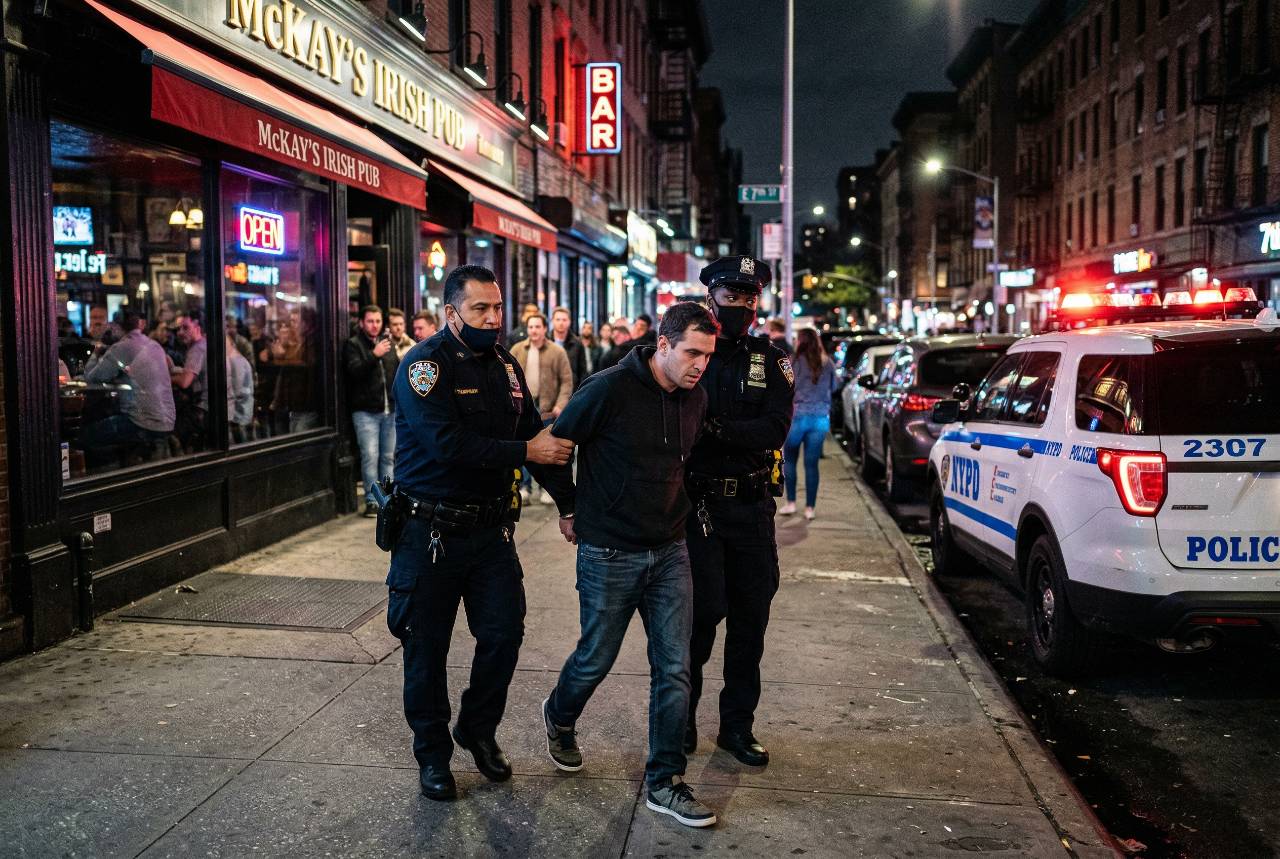
A stabbing outside a bar in Nassau County. A street fight in Brooklyn that sends someone to the emergency room. In either scenario, the District Attorney may charge Assault in the First Degree — a Class B violent felony that carries up to 25 years in state prison. But one question will shape the entire case from arraignment through trial: did the victim actually suffer a “serious physical injury” as New York law defines it?
Most people assume that if someone was badly hurt, a serious felony charge is automatic. In reality, “serious physical injury” is a specific, legally defined element — and whether a given injury meets that threshold is one of the most fiercely contested factual and legal questions in first-degree assault prosecutions across New York City and Long Island.
This article explains what “serious physical injury” means under New York Penal Law, how each subsection of § 120.10 uses the element differently, what prosecutors must prove and how they attempt to prove it, how New York’s appellate courts have applied the standard, and — critically — what defenses can challenge the sufficiency of the injury evidence.
Disclaimer: This article is for educational purposes only and does not constitute legal advice. If you are facing criminal charges, consult a qualified New York assault lawyer for guidance specific to your case.
The Legal Foundation: NY Penal Law § 10.00(10)
The Statutory Definition
Under New York Penal Law § 10.00(10), “serious physical injury” means a physical injury which creates a substantial risk of death, or which causes death or serious and protracted disfigurement, protracted impairment of health, or protracted loss or impairment of the function of any bodily organ.
This is a high statutory threshold — intentionally narrow, reserved for injuries that are life-threatening or carry long-term consequences. An injury does not automatically meet this standard because it required surgery, left a scar, or caused significant pain. The injury must satisfy one of the statute’s specific criteria, and the prosecution bears the burden of proving it does.
How “Serious Physical Injury” Compares to “Physical Injury”
New York’s Penal Law draws a sharp line between two distinct injury thresholds, and the distinction governs which assault charge applies.
Physical injury, defined under § 10.00(9), means impairment of physical condition or substantial pain. This lower threshold supports charges like Assault in the Third Degree (§ 120.00) — a Class A misdemeanor — or certain subsections of Assault in the Second Degree (§ 120.05).
Serious physical injury, defined under § 10.00(10), requires proof of a substantial risk of death, death itself, serious and protracted disfigurement, protracted impairment of health, or protracted loss or impairment of a bodily organ. This higher threshold is required for Assault in the First Degree and certain subsections of Assault in the Second Degree.
The leap from one threshold to the other is enormous. It is the difference between a Class A misdemeanor (or Class D felony) and a Class B violent felony with a mandatory minimum of five years in state prison.
The Five Statutory Categories of Serious Physical Injury
NY Penal Law § 10.00(10) identifies five ways an injury can qualify. Each is a distinct legal theory, and the prosecution must prove that the victim’s injury satisfies at least one.
1. Substantial risk of death. The injury creates an actual — not merely hypothetical — risk that the victim could die. New York courts have emphasized that this must be a real, demonstrated risk, not a speculative one.
2. Death. The injury causes the victim’s death. This category overlaps with homicide charges and arises in cases where the defendant is charged with both assault and a homicide offense.
3. Serious and protracted disfigurement. The injury causes a disfigurement that is both serious (objectively distressing to a reasonable observer) and protracted (lasting for a significant period of time).
4. Protracted impairment of health. The injury causes a health impairment that is extended in duration — not merely temporary or quickly resolved.
5. Protracted loss or impairment of a bodily organ. The injury permanently or significantly impairs the function of an organ. Courts have held that “protracted” means lasting, not transient.
How “Serious Physical Injury” Applies Across the Subsections of § 120.10
Overview of First-Degree Assault
New York Penal Law § 120.10 defines Assault in the First Degree as a Class B violent felony. Under NY Penal Law § 70.02, sentencing ranges are determinate: 5 to 25 years for a first offender, 8 to 25 years for a second felony offender, and 10 to 25 years for a second violent felony offender. There is no possibility of a non-incarceratory sentence — a conviction carries mandatory state imprisonment.
The statute contains four subsections, each of which involves serious physical injury in a different way.
§ 120.10(1): The Core Intent-Based Charge
This is the most commonly charged subsection. The prosecution must prove three things: the defendant intended to cause serious physical injury, the defendant used a deadly weapon or dangerous instrument, and serious physical injury actually resulted.
Both the intent and the injury elements must be established. If the prosecution proves intent but the injury evidence falls short of “serious,” the charge may fail or be reduced to a lesser offense.
Under § 10.00(12), a “deadly weapon” is a loaded firearm or specified bladed or impact weapons such as switchblades, daggers, billies, blackjacks, and metal knuckles. Under § 10.00(13), a “dangerous instrument” is any article that, under the circumstances in which it is used, is readily capable of causing death or serious physical injury — a far broader category that New York courts have applied to bottles, bar stools, vehicles, and other everyday objects.
§ 120.10(2): The Disfigurement and Amputation Subsection
This subsection does not require a weapon. The prosecution must prove that the defendant intended to disfigure another person seriously and permanently, or to destroy, amputate, or permanently disable a member or organ of the body — and that the defendant actually caused such harm. The serious physical injury element is defined by the injury itself: actual disfigurement or permanent disability.
§ 120.10(3): Depraved Indifference
This subsection does not require intent to cause serious physical injury at all. Instead, the prosecution must prove that the defendant recklessly engaged in conduct under circumstances evincing a depraved indifference to human life, creating a grave risk of death, and that serious physical injury actually resulted. The injury threshold is identical to the other subsections, but the mental state burden is different.
§ 120.10(4): Felony Assault
When serious physical injury is caused during the commission of a felony — by any participant in that felony — to a non-participant, first-degree assault applies regardless of intent to injure. As the official CJI2d jury instruction for § 120.10(4).pdf) explains, it does not matter that the serious physical injury was caused unintentionally or accidentally. The felony conduct supplies the culpable mental state.
How New York Courts Have Defined Each Category
The statutory definition of serious physical injury creates the framework, but the case law gives it teeth. New York’s appellate courts have built a detailed body of precedent defining what injuries do — and do not — satisfy each category.
Substantial Risk of Death: What Courts Have Accepted and Rejected
This is the most frequently litigated category. Courts have made clear that the risk must be actual, not speculative or hypothetical.
Injuries courts have found sufficient:
A deep neck laceration near major blood vessels, documented on CT scan with active internal bleeding, was found sufficient where the attending physician testified that without rapid intervention, the bleeding would risk airway compromise and death. A bullet lodged in soft tissue near the femoral artery was upheld by the New York Court of Appeals in People v. Garland, 32 NY3d 1094 (2018), where a medical expert testified that the bullet’s proximity to the femoral artery posed a substantial risk. The Court applied a deferential standard, affirming that the jury acted rationally based on permissible inferences from the evidence. In People v. Rojas (3d Dept. 2014), where the defendant stomped on the victim’s head causing a fractured skull and brain hemorrhage requiring approximately two weeks of hospitalization, the treating neurologist’s testimony established the element.
Injuries courts have found insufficient:
A bullet lodged in the neck that caused no damage to the esophagus, trachea, or major nerves or blood vessels was deemed insufficient in People v. Horton. A bullet wound that caused temporary infection but did not injure any vital organs fell short in People v. Matthews. And a 2–3 inch laceration to the back of the head that was sutured — where the doctor testified only that it “could have been life threatening” without establishing actual substantial risk — was rejected in People v. Armstrong (4th Dept. 2015).
The critical distinction: defense counsel must ensure the fact-finder does not conflate the severity of the attack with the actual severity of the injury, or treat hypothetical complications as proof of actual substantial risk of death.
Serious and Protracted Disfigurement: The Objective Standard
The New York Court of Appeals established the controlling test in People v. McKinnon, 15 NY3d 311 (2010): an injury is seriously disfiguring when a reasonable observer would find the injured person’s altered appearance distressing or objectionable. The injury must be evaluated in context — considering its location on the body and the victim’s overall appearance.
Found sufficient: A scar running from the forehead to the jaw from a box-cutter slashing, viewed as a whole and considering its prominent facial location, qualified in People v. Jimenez (1st Dept. 2017). Five displaced orbital fractures plus scarring around the eye, lip, and neck supported the conviction in People v. Sipp (2019, Court of Appeals). Permanent loss of four teeth has also been held sufficient under this category in People v. Everett (1st Dept. 2013).
Found insufficient: Two bite wounds on the forearm requiring no stitches and no plastic surgery — the Court of Appeals reversed the conviction in People v. McKinnon itself. A broken nose surgically repaired with no residual impairment of nasal function, along with chipped teeth likely needing resurfacing every ten years, was found insufficient in People v. Rosado (1st Dept. 2011), where the court held that a mere possibility of future effects does not meet the standard. A 7cm sutured scar on the inner forearm from a sharp instrument, where the victim spent only one day in the hospital, fell short in People v. Stewart, 18 NY3d 831 (2011).
The “protracted” requirement: Courts have defined “protracted” to mean lasting for a significant period of time. A scar expected to fade, or an injury whose effects are resolved by surgery, may fail this element even if it was serious at the time it was inflicted.
Protracted Impairment of Health
This category requires lasting, extended health consequences — not merely temporary ones. Courts have found insufficient a sutured stab wound where the victim reported the scars “hurt when the weather changes” 18 months later (People v. Castillo, 2d Dept. 1993), as well as a stabbing victim who was playing soccer after six months (People v. Daniels, 3d Dept. 2012).
Protracted Loss or Impairment of a Bodily Organ
This category captures injuries that permanently or significantly deprive the victim of the use or function of a bodily organ. New York courts have interpreted “organ” broadly — including teeth. The key question is whether the damage to the organ’s function is lasting. Courts have recognized that successful surgical repair may affect whether an injury qualifies, because if function is fully restored, the impairment may not be considered “protracted.”
How Prosecutors Build the Serious Physical Injury Case
The Role of Medical Testimony
The serious physical injury element is almost always established through medical evidence, and the quality and specificity of that evidence is often the deciding factor. Prosecutors typically present treating physicians armed with emergency room records, surgical notes, CT scans, and X-rays establishing the nature, location, and severity of the injury. Expert testimony from physicians explaining why the injury created a substantial risk of death — or how its proximity to major structures elevated the risk — is frequently the centerpiece of the prosecution’s case. For disfigurement claims, courts have emphasized that contemporaneous photographs and in-court display of scars are essential. People v. McKinnon was lost in part because the prosecutor failed to create an adequate record of what the jury observed.
The Jury Instruction
The official CJI2d instruction for § 120.10(1) requires jurors to find serious physical injury beyond a reasonable doubt, applying the statutory definition from § 10.00(10). The CJI2d Causation-Injury charge further requires that the defendant’s conduct be a “sufficiently direct cause” of the injury — meaning both an actual contributory cause and a reasonably foreseeable result of the defendant’s conduct.
Expert Witnesses: A Potential Vulnerability
People v. Garland is instructive on this point. The dissent in that Court of Appeals decision criticized the majority for crediting testimony from a physician who had not personally examined the victim or reviewed recent medical records. The dissent argued that testimony based on hypothetical complications should not be accorded the same weight as testimony based on direct examination — a line of argument that remains available to skilled defense counsel in every case where the prosecution relies on experts who lacked firsthand involvement.
Defenses That Challenge the Serious Physical Injury Element
This is often the most powerful avenue of defense in first-degree assault cases. Unlike intent — which is inferred from circumstances — injury evidence is largely objective and documentable. Several defense strategies directly attack this element.
Arguing the Injury Is “Physical Injury,” Not “Serious Physical Injury”
The most common defense strategy is to accept that the victim was injured, but contest whether the injury rises to the “serious” threshold. A successful challenge results in a reduction from Assault in the First Degree (Class B violent felony, 5–25 years) to Assault in the Second Degree (Class D violent felony, 2–7 years) or Assault in the Third Degree (Class A misdemeanor, up to one year). As People v. Rosado, People v. Stewart, and People v. McKinnon demonstrate, courts have repeatedly found that injuries appearing severe at first glance do not always satisfy § 10.00(10).
Key arguments under this strategy include establishing that the risk of death was hypothetical rather than actual, that successful surgical repair resolved any functional impairment, that a scar would not be found distressing or objectionable by a reasonable observer given its location and the victim’s overall appearance, or that the health impairment was temporary rather than protracted.
Challenging the Medical Evidence
Because serious physical injury depends heavily on medical testimony, cross-examination of the prosecution’s medical witnesses is critical. Defense counsel should probe the actual distance between the injury site and critical structures, the distinction between likelihood and mere possibility of complications, whether the examining physician personally evaluated the patient and reviewed contemporaneous records, the extent to which the injury has resolved or been corrected by surgery, and how the victim’s current appearance compares to the time of injury.
Requesting a Lesser-Included Charge
Defense counsel may seek jury instructions on lesser-included offenses: Assault in the Second Degree (§ 120.05), Assault in the Third Degree (§ 120.00), or even Attempted Assault in the Third Degree, all of which require only “physical injury.” In People v. Nesbitt, 20 NY3d 1080 (2013), the New York Court of Appeals found that trial counsel was constitutionally ineffective for conceding the serious physical injury element without a good-faith basis and failing to request a charge-down — underscoring that contesting this element is not optional when the evidence is close.
Self-Defense and Justification
Even where serious physical injury is established, a defendant may assert justification under NY Penal Law Article 35 — arguing that the force used was necessary to defend against imminent unlawful physical force. Once raised, the prosecution must disprove self-defense beyond a reasonable doubt. In NYC and Long Island courts, self-defense claims frequently turn on surveillance footage, witness credibility, and identification of the initial aggressor. For a deeper discussion of how assault charges can be challenged, see our guide on how to get assault charges dismissed.
How This Plays Out in NYC and Long Island Courtrooms
New York City
First-degree assault prosecutions in the five boroughs arise most commonly from stabbings, shootings, and incidents involving weapons. Serious physical injury determinations in NYC often hinge on records from Level 1 Trauma Centers such as Bellevue, Kings County, and Lincoln Medical Center — institutions where attending physicians are experienced expert witnesses and medical documentation tends to be extensive. The quality of these records can cut both ways: thorough documentation helps prosecutors establish the element, but it also gives defense counsel a detailed factual basis to challenge whether the injury truly satisfies the statutory threshold.
Nassau County
Nassau County maintains one of the lower violent crime rates in New York State. Domestic violence escalations and stabbings are the most common circumstances giving rise to first-degree assault charges in the county. Misdemeanor assault charges are handled in Nassau County District Court, while first-degree assault — as a Class B violent felony — is prosecuted in Nassau County Supreme Court.
Suffolk County
Suffolk County assault cases are handled through courts in Riverhead, Central Islip, and multiple district court locations. The Suffolk County Police Department tracks Assault in the First Degree within its Uniform Crime Report framework, categorizing it as the most serious end of the aggravated assault spectrum. The county’s historically significant dismissal rate across assault cases reflects the meaningful evidentiary battles — including serious physical injury — that routinely arise in Suffolk County prosecutions.
Charge Comparison: When the Injury Threshold Determines Everything
The distinction between “physical injury” and “serious physical injury” is not abstract. It determines the severity of the charge, the sentencing exposure, and the defendant’s long-term record.
Assault in the Third Degree — § 120.00(1) — requires physical injury and intent. It is classified as a Class A misdemeanor carrying up to one year of incarceration.
Assault in the Third Degree (Reckless) — § 120.00(2) — requires physical injury and recklessness. Also a Class A misdemeanor with up to one year.
Assault in the Second Degree — § 120.05(1) — requires serious physical injury and intent. It is classified as a Class D violent felony carrying 2 to 7 years.
Assault in the Second Degree (Weapon) — § 120.05(2) — requires physical injury, intent, and a deadly weapon or dangerous instrument. Also a Class D violent felony carrying 2 to 7 years.
Assault in the First Degree — § 120.10(1) — requires serious physical injury, intent, and a deadly weapon or dangerous instrument. It is classified as a Class B violent felony carrying 5 to 25 years.
Assault in the First Degree (Depraved Indifference) — § 120.10(3) — requires serious physical injury and depraved indifference to human life. Also a Class B violent felony carrying 5 to 25 years.
Frequently Asked Questions
Does any injury requiring surgery automatically constitute “serious physical injury”?
Not necessarily. Courts have found that successfully repaired injuries — such as a surgically corrected broken nose in People v. Rosado — do not automatically satisfy the standard if the surgery restored function and no protracted impairment remained. The analysis focuses on whether the resulting condition meets one of the five statutory categories, not the severity of the treatment that was required.
What does “protracted” mean in this context?
New York courts have defined “protracted” to mean lasting for a significant period of time. Brief or fully resolved conditions have been found insufficient, while injuries causing months-long or permanent impairment generally qualify. There is no fixed time threshold — it is a factual determination based on the specific injury and its trajectory.
Can a scar constitute “serious physical injury”?
Yes, but only if it meets the “serious and protracted disfigurement” standard. Under People v. McKinnon, the injury must be objectively distressing or objectionable to a reasonable observer, evaluated in context of the scar’s location, size, and the victim’s overall appearance. Minor or fading scars, or scars in non-prominent locations, may fall short.
Can the prosecution use a doctor who never examined the victim?
Courts have allowed expert medical testimony from physicians who did not personally examine the victim, but this remains an active area of litigation. The dissent in People v. Garland argued forcefully that such testimony should be given limited weight. Defense counsel should challenge the foundation of any expert opinion that is not grounded in personal examination.
What happens if serious physical injury cannot be proven but physical injury can?
The charge may be reduced to a lesser offense — from first-degree assault (Class B violent felony) to second-degree assault (Class D violent felony) or third-degree assault (Class A misdemeanor) — depending on the other elements. This reduction can mean the difference between a multi-year state prison sentence and a misdemeanor record.
The Bottom Line
Under New York law, “serious physical injury” is not a lay concept — it is a precisely defined statutory element that the prosecution must prove beyond a reasonable doubt. Whether an injury creates a substantial risk of death, constitutes serious and protracted disfigurement, or causes protracted impairment of a bodily organ are contested questions of law and fact in every first-degree assault case. New York’s appellate courts have reversed first-degree assault convictions and reduced charges where the medical evidence fell short, where counsel failed to challenge the injury element, or where the prosecution relied on speculative rather than actual risk.
An experienced criminal defense attorney will scrutinize the medical records, cross-examine the prosecution’s physicians, and challenge whether the injury truly meets the statutory threshold — or whether the case should have been charged as a lower-degree offense. The stakes could not be higher: the difference between a Class B violent felony and a misdemeanor is the difference between five to twenty-five years in state prison and a path to avoiding incarceration entirely.
If you or someone you know has been charged with Assault in the First Degree in New York City, Nassau County, or Suffolk County, contact Lebedin Kofman LLP for a confidential consultation. View our case results to learn more about the outcomes we have achieved for our clients.